
Griffith's golden-saxifrage
Chrysosplenium griffithii
Description
Growing requirements
Griffith's golden-saxifrage (Chrysosplenium griffithii) is a herbaceous perennial belonging to the Saxifragaceae family. This species originates from the mountainous regions of Asia, where it thrives in humid and shaded forest environments.
To ensure healthy growth, the plant requires cool and shaded conditions. It is highly sensitive to direct sunlight and intense heat, making it an excellent choice for woodland garden settings or damp, sheltered areas.
The soil should be rich in organic matter, consistently moist, and well-draining. While the plant loves humidity, it cannot survive in stagnant water, which can lead to rapid deterioration of its root system.
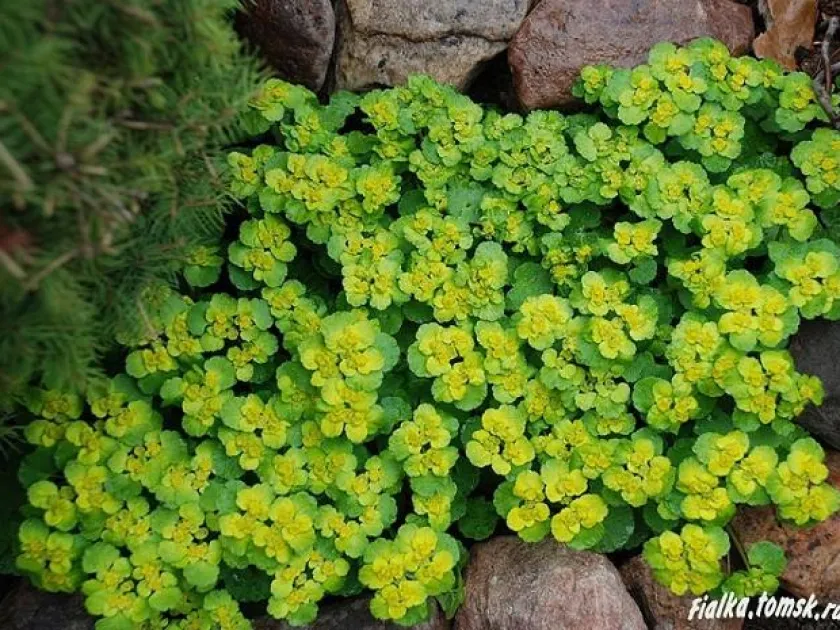
Botanically, it features small, crenate leaves and clusters of tiny flowers surrounded by prominent, often yellowish-green bracts. The plant spreads via creeping stolons, creating a lush carpet effect in ideal habitats.
Its primary use is in ornamental landscaping, specifically for damp rock gardens, stream edges, or shaded borders. It is valued for its ability to brighten dark corners of the landscape with its early spring floral display.
Main diseases and pests
Root rot is the most common health issue for this plant, typically caused by waterlogged soil conditions and poor ventilation around the foliage.
Slugs and snails are the most significant pests, as they thrive in the same moist environments that the plant prefers, often devouring the succulent foliage.
Fungal infections can spread rapidly during humid, stagnant weather, leading to leaf spot and other related issues that diminish the plant's aesthetic value.
Preventative measures include ensuring proper plant spacing to improve airflow and avoiding overhead irrigation that leaves water sitting on the leaves.
Monitoring the soil moisture levels is crucial, as both overwatering and prolonged dry spells pose significant risks to the plant's overall viability.