
Japanese golden saxifrage
Chrysosplenium japonicum
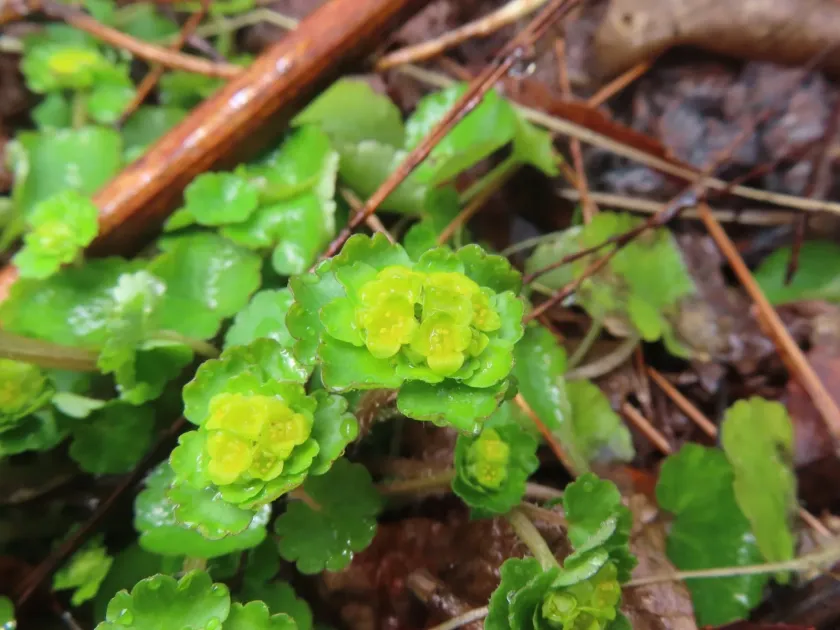
Description
Growing requirements
Japanese golden saxifrage, or Chrysosplenium japonicum, is a perennial flowering plant that belongs to the Saxifragaceae family. Native to East Asia, including Japan and the Korean Peninsula, it is highly valued for its ability to thrive in cool, moist, and shady environments.
The cultivation requirements are centered around moisture management. This species performs best in rich, organic, and damp soils. It is frequently used in landscape design near garden streams, ponds, or in damp woodland settings where it can spread to form attractive green carpets.
Regarding light, this plant is strictly shade-loving. Exposure to direct sunlight, especially in the afternoon, will cause rapid dehydration and scorching of the foliage, making placement in a dense canopy area essential.
Soil structure should be loose and humus-rich. While it enjoys consistent moisture, the soil must remain aerated to prevent anaerobic conditions. Applying a layer of organic mulch helps maintain soil temperature and moisture levels consistently.
Propagation is primarily done by division of established clumps, preferably in early spring or autumn. This ensures the plant has enough time to establish its root system before the onset of extreme seasonal temperatures.
Main diseases and pests
The most prominent pests for Japanese golden saxifrage are gastropods, including slugs and snails, which find the succulent leaves highly palatable. These pests can cause significant aesthetic damage to the planting patches.
Fungal diseases related to excessive moisture, such as grey mold or various root rots, can occur if the plants are situated in areas with poor drainage or insufficient air movement between individual plants.
Maintenance to prevent such threats includes removing debris around the base of the plant to improve airflow and checking plants regularly for early signs of damage or decay during wet weather conditions.
In extreme heat, the plant may experience stress, which makes it more susceptible to opportunistic infections. Monitoring the moisture levels during heatwaves is crucial to maintaining the plant's natural vigor.
In colder regions, while the plant is hardy, providing a protective covering of organic matter during winter serves as insulation, protecting the crowns from cycles of freezing and thawing.