
Alternate-leaved golden-saxifrage
Chrysosplenium alternifolium
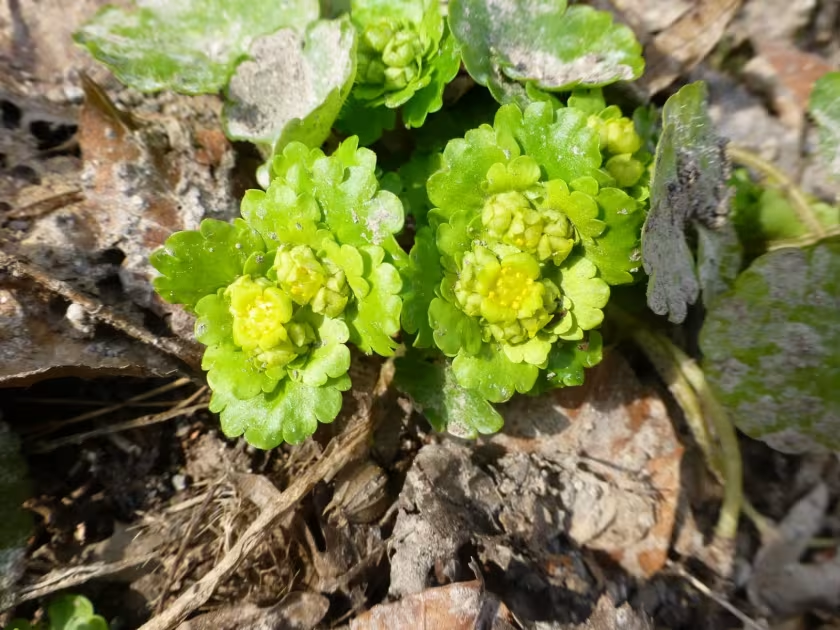
Description
Growing requirements
The alternate-leaved golden-saxifrage (Chrysosplenium alternifolium) is a small perennial plant belonging to the Saxifragaceae family. It is typically found in moist, shaded habitats such as stream banks, forests, and damp meadows.
The native range of this plant covers most of the temperate regions of the Northern Hemisphere, extending across Europe, Asia, and North America. It is considered a moisture-loving species that thrives in undisturbed, nutrient-rich environments.
Botanically, the plant is characterized by its alternate kidney-shaped leaves and bright yellow bracts that surround clusters of tiny, inconspicuous flowers. It usually grows in patches, forming dense mats of low-lying vegetation across the forest floor.
Climatic requirements focus on coolness and constant humidity. The plant does not tolerate high temperatures or dry environments. In cultivation, it requires a shaded area protected from intense midday sunlight to mimic its natural woodland habitat.
Soil conditions must provide high organic content and good drainage. While it likes damp conditions, the plant is sensitive to waterlogged soil, which can lead to root failure. A neutral or slightly acidic pH is ideal for healthy growth and rapid expansion.
Main diseases and pests
Generally, this species is robust in its natural setting, but cultivation introduces specific challenges. Fungal pathogens are the most significant threat to the health of the plants, particularly in environments with poor air circulation.
Root rot remains the primary concern, typically triggered by improper irrigation management or soil compaction. Leaf spots can also occur, causing the foliage to prematurely wither and impacting the plant's overall development during the growing season.
Gastropods, such as slugs and snails, find the succulent leaves of the golden-saxifrage highly palatable. During wet springs, these pests can decimate young growth if not monitored or managed through physical barriers or natural control measures.
Aphids occasionally infest the flowering shoots, especially during periods of stress or uncharacteristic dry spells. Keeping the plants hydrated and healthy is the best natural defense against such infestations, ensuring the plant can sustain its growth.
Management of these threats involves cultural control techniques rather than chemical interventions. Ensuring the plants are spaced correctly and providing sufficient organic mulch helps maintain soil moisture while promoting the biological resistance of the crop.