
Golden Saxifrage
Chrysosplenium flagelliferum
Description
Growing requirements
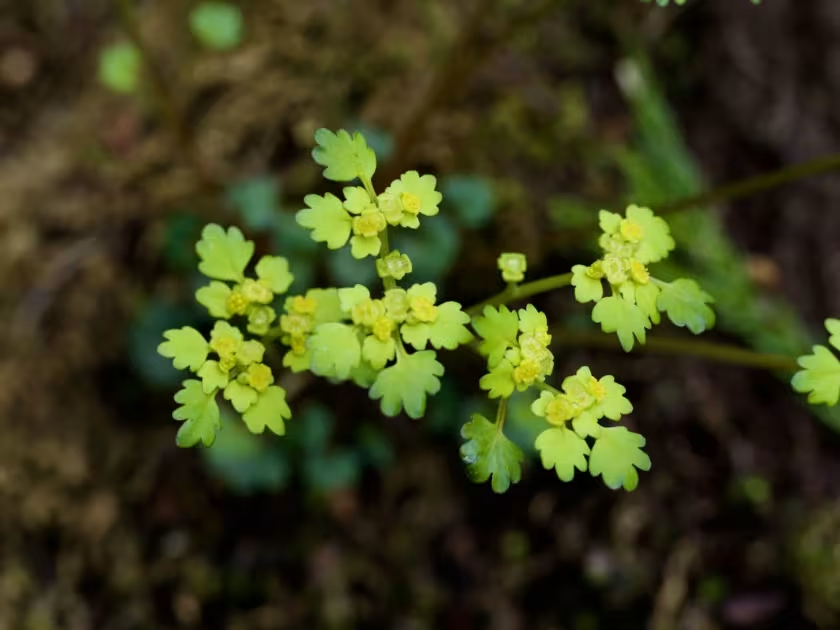
Golden Saxifrage (Chrysosplenium flagelliferum) is a perennial herb belonging to the Saxifragaceae family. It is known for its ability to spread rapidly via stolons, creating lush, green carpets in damp, shaded environments, making it a valuable plant for specific landscape applications.
The plant exhibits distinctive botanical traits, including small, yellow-green flowers and rounded, scalloped leaves. Its root system is shallow, reflecting its evolutionary adaptation to moist soil surfaces and forest understory conditions where competition for deep soil nutrients is high.
Regarding cultivation requirements, the species thrives in nutrient-rich, moist, and well-drained soils. It is highly intolerant to drought, requiring constant hydration, and prefers locations that receive filtered light or partial shade throughout the day to avoid leaf scorch.
In terms of climate, it is remarkably hardy and well-suited for temperate regions. It typically enters a dormancy period in late autumn and begins rapid vegetative growth as temperatures rise in the spring, making it a reliable ground cover for cool, humid regions.
Economically and horticulturally, this plant is primarily used as an ornamental species. It serves as an excellent candidate for damp garden borders, bog gardens, or as a naturalizing plant in wooded areas where its rapid growth habit can be utilized effectively.
Main diseases and pests
The primary threats to this culture are fungal diseases triggered by poor air circulation and excessive waterlogging. Damp environments, while essential, can become breeding grounds for pathogens if the plant density becomes too high for natural airflow.
Gastropods, such as slugs and snails, represent the most significant pest threat. They are attracted to the succulent foliage and can decimate a stand within a short period, especially during wet seasons which coincide with the plant's active growth phase.
Another major issue is the encroachment of invasive weeds. Because the plant has a shallow root system, it cannot easily compete with aggressive perennial weeds that may overshadow it and deplete the soil moisture it relies upon for survival.
To maintain plant health, it is essential to monitor soil moisture levels and ensure that the substrate does not turn sour or anaerobic. Regular thinning of the plants helps to manage density and reduce the risk of humidity-related rot.
If management is required, focus on physical pest control methods and organic mulching. Chemical intervention should be minimized as the species may exhibit sensitivity to standard agricultural pesticides applied to broadleaf crops.