
Woolly golden-saxifrage
Chrysosplenium lanuginosum
Description
Growing requirements
The woolly golden-saxifrage (Chrysosplenium lanuginosum) is a perennial herbaceous plant belonging to the Saxifrage family (Saxifragaceae). It is native to the moist, mountainous regions of East Asia, where it thrives in shaded and humid ecological niches.
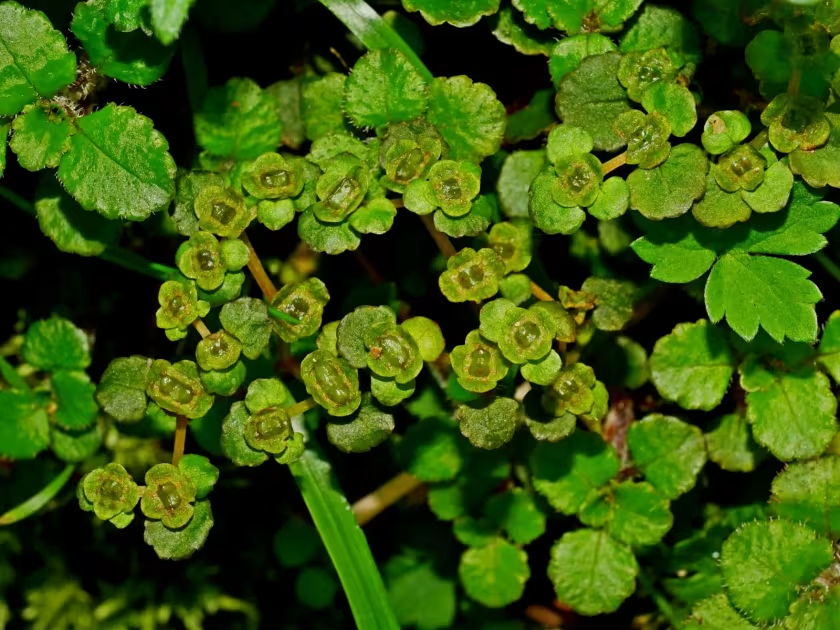
The plant is defined by its distinct morphological features, specifically the soft, woolly hairs covering its stems and leaves. It typically grows in low, spreading clumps, creating a natural ground cover in its native habitat, which is adapted to high-humidity environments.
Regarding climate requirements, the species is highly sensitive to heat and direct sunlight. It requires a cool, temperate climate with consistent moisture levels. In cultivation, it is best suited for woodland gardens or north-facing sites where evaporation is kept to a minimum.
Soil quality must be rich in humus and possess excellent water-holding capacity while ensuring sufficient drainage. Maintaining a slightly acidic to neutral pH is generally recommended for optimal growth. The plant should never be allowed to dry out completely, as it has no drought-tolerance mechanisms.
The primary horticultural use of the woolly golden-saxifrage is as a ground cover plant for damp, shady garden areas. It is prized by collectors and gardeners for its unique texture and its ability to colonize difficult areas where conventional lawn grasses would fail to survive.
Main diseases and pests
Fungal diseases are the most significant threat to the health of this crop, particularly in stagnant, humid environments. Root rot and leaf spot pathogens can spread rapidly if the planting density is too high or if drainage is insufficient to prevent water saturation.
Gastropods, including slugs and snails, are the main pests that target the succulent foliage. Managing these pests is crucial for preserving the plant's aesthetic value, and this is best achieved through regular garden hygiene and the targeted use of organic deterrents.