
Cheiridopsis vanbredae
Cheiridopsis vanbredae
Description
Growing requirements
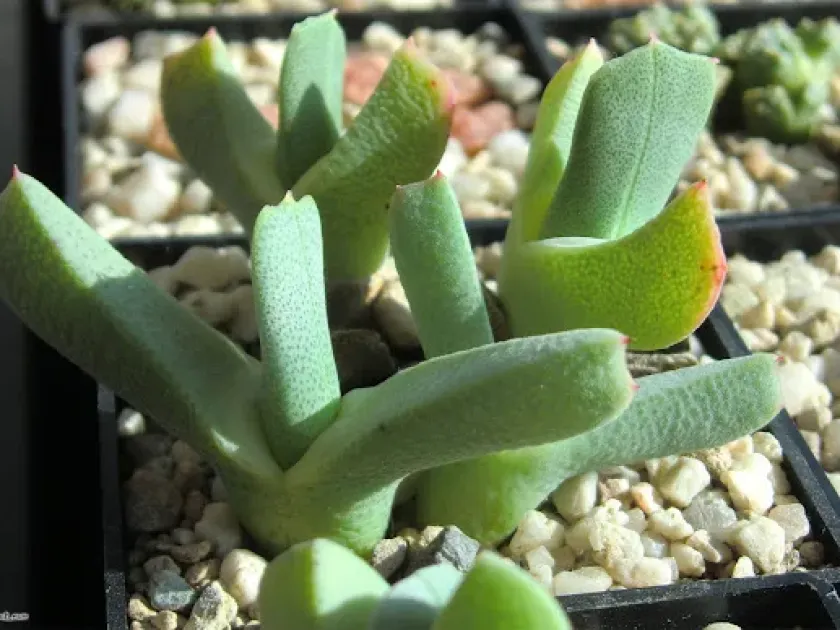
Cheiridopsis vanbredae is a perennial succulent plant belonging to the Aizoaceae family, native to the arid landscapes of South Africa. The species is highly adapted to extreme conditions, featuring fleshy, succulent leaves that allow it to endure long periods of drought through water storage.
This crop requires intensive solar exposure throughout the year to maintain its compact, typical growth form. During the summer, it thrives in warm temperatures between +20°C and +30°C, while in the winter, it demands a dormant period in cool, well-ventilated conditions, ideally between +8°C and +12°C.
Cultivation success depends heavily on the growing medium, which must be extremely porous and mineral-based. A recommended substrate includes a mix of pumice, coarse river sand, and a small amount of leached loam, which ensures rapid drainage and prevents the roots from sitting in stagnant moisture.
Watering intervals should be strictly aligned with the plant's growth cycle, allowing the soil to dry out completely between waterings. During the cold season, watering must be suspended almost entirely to mirror the natural dormant cycle of the plant, preventing rot during lower light intensity periods.
The primary use of Cheiridopsis vanbredae is in ornamental horticulture, specifically for specialized succulent collections and botanical displays. It is not an agricultural crop in the traditional sense, but it remains a significant species for research into xerophytic plant physiology and adaptation.
Main diseases and pests
The most common threat to this species is root and crown rot, triggered primarily by overwatering or poor airflow in the growing environment. Once the root system is compromised by fungal pathogens due to humidity, recovery is extremely difficult and often leads to the loss of the plant.
Insect pests such as mealybugs and spider mites are frequent invaders in indoor collections. These pests thrive in dry environments and can cause significant damage to the epidermis of the leaves; therefore, regular monitoring and immediate spot treatment with suitable insecticides are essential for health.