
Cheiridopsis brownii
Cheiridopsis brownii
Description
Growing requirements
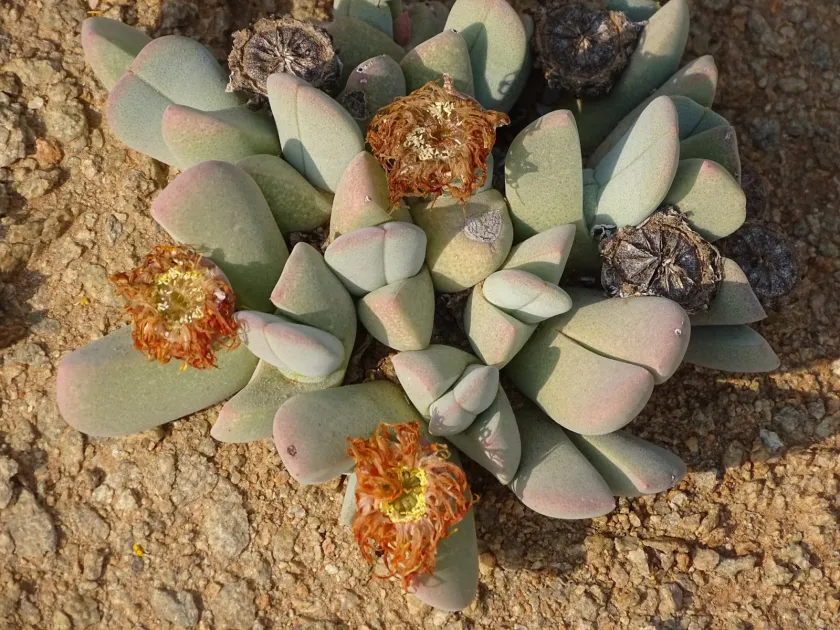
Cheiridopsis brownii is a small, perennial succulent species belonging to the Aizoaceae family. Native to the arid regions of Southern Africa, it is highly adapted to extreme temperature fluctuations and long periods of drought typical of its natural habitat.
The plant features succulent, fused leaves that form dense clumps. These leaves are covered with a protective waxy cuticle, which serves as a natural defense mechanism against intense solar radiation, giving the plant a distinctive glaucous appearance.
To thrive in a cultivated environment, this species requires significant levels of direct sunlight. Placing it in a south-facing location is essential to prevent etiolation, which is the process of unnatural stretching that ruins the plant's aesthetic and health.
Soil composition must be extremely porous and well-draining. A mix consisting primarily of coarse sand, perlite, and small gravel is recommended, while the amount of organic matter should be kept to a bare minimum to avoid water retention.
Watering requirements are strictly seasonal. During the growth cycle, light and periodic irrigation are necessary, but during the summer dormancy phase, the plant requires almost completely dry conditions to simulate its native summer drought.
Main diseases and pests
The primary threat to the health of Cheiridopsis brownii is overwatering. Excessive moisture in the soil leads to rapid rot of the root system and can cause the collapse of the leaf structures within a very short period.
Mealybugs are the most common pests, often hiding in the crevices between the leaves. Regular inspection of the plant and the use of systemic insecticides are the most effective ways to manage potential outbreaks.
Spider mites may become a nuisance in environments with poor ventilation and persistently dry air. Maintaining moderate air circulation around the plant is a critical preventative measure for these pests.
Fungal infections typically manifest when the plant is kept in humid, cool conditions. Since the plant is highly susceptible to tissue rot, ensuring the foliage remains dry during any necessary watering is vital for long-term survival.
Root-knot nematodes are significant subterranean threats that compromise the plant's ability to absorb nutrients. Using pre-sterilized substrates is the standard professional approach to prevent such soil-borne biological hazards.