
Cheiridopsis derenbergiana
Cheiridopsis derenbergiana
Description
Growing requirements
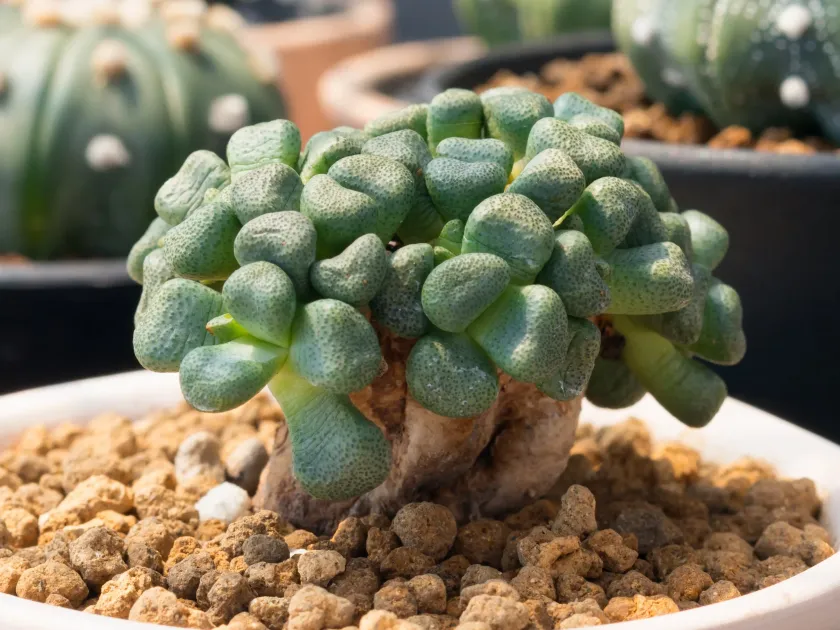
Cheiridopsis derenbergiana is a perennial succulent plant belonging to the Aizoaceae family, native to the arid regions of South Africa. It is a highly specialized plant that has evolved to thrive in harsh, desert-like conditions where water is scarce and sunlight is intense.
The plant grows as a small, compact cluster consisting of fleshy, opposite leaves that are joined at the base. These leaves usually feature a pale green or grey-green color and are often covered with tiny spots or papillae, which help to reflect excessive radiation and minimize transpiration.
For cultivation, this species requires a location with bright, direct light throughout the day. In indoor environments, placing the plant on a sunny windowsill or using grow lights is necessary to maintain its compact form and prevent the stems from becoming etiolated due to insufficient light.
The growing medium must be highly porous and well-draining to prevent water accumulation around the root system. A suitable potting mix should consist of a large proportion of inorganic materials, such as coarse river sand, perlite, or volcanic grit, ensuring rapid drying after watering.
Watering management is the most critical aspect of caring for this succulent. During the active growing season, water only when the substrate has completely dried out. During the winter dormancy period, watering should be significantly reduced or suspended to prevent root rot.
Main diseases and pests
The primary threats to Cheiridopsis derenbergiana are fungal infections caused by overwatering and poor drainage. Excess moisture in the soil can quickly lead to root rot and collar rot, which are often fatal to the plant if not addressed immediately upon discovery.
Pests such as mealybugs and spider mites are potential threats, especially if the plant is kept in an environment with low airflow. These pests hide in the crevices between the leaves, making them difficult to detect and treat without careful inspection.
To mitigate pest issues, it is recommended to maintain good hygiene around the plant and improve air circulation in the growing space. Regular inspections will help identify infestations early, allowing for targeted treatment with appropriate insecticidal soaps or systemic chemicals.
If fungal diseases appear, it is essential to remove any damaged or decayed tissue promptly and treat the affected areas with a fungicide. After treatment, the plant should be repotted in fresh, dry soil and kept under strictly controlled watering conditions until full recovery is observed.
Overall, Cheiridopsis derenbergiana is a resilient and low-maintenance plant when its specific environmental requirements are met. By avoiding excessive moisture and providing sufficient sunlight, growers can easily maintain healthy, long-lasting specimens for many years.