
Cheiridopsis pillansii
Cheiridopsis pillansii
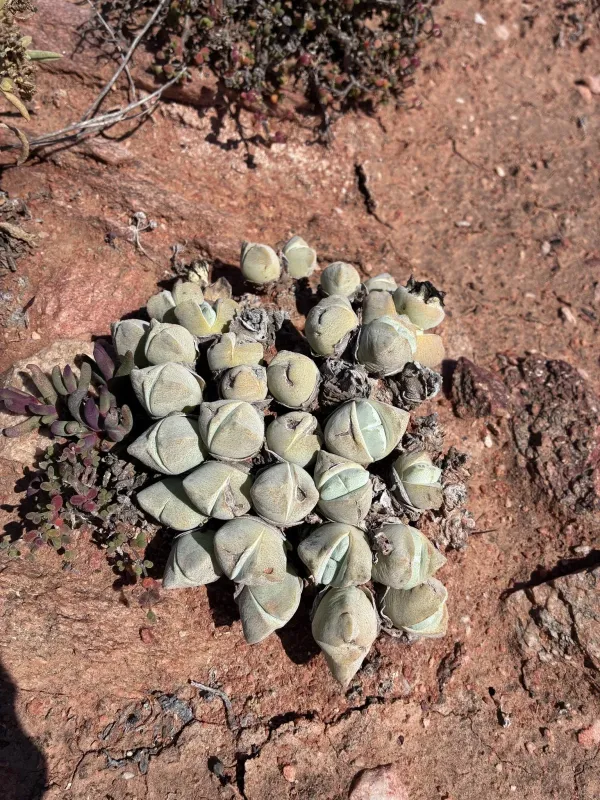
Description
Sowing dates
Sowing seeds of Cheiridopsis pillansii is best performed in late winter or early spring to coincide with increasing daylight hours. The optimal germination temperature ranges from +20°C to +25°C, ensuring robust early seedling development.
For sowing, use wide shallow containers with drainage holes, filled with a loose, highly porous substrate consisting of sand and fine peat. Spread seeds across the surface, pressing them gently into the medium without burying them too deep.
Keep the containers covered with glass or film to maintain high humidity levels, ventilating frequently to prevent fungal growth. Once seedlings emerge, gradually remove the cover to acclimatize them to lower humidity levels.
Transplanting seedlings into individual pots should only be carried out once they have developed a strong root system and several sets of true leaves. Avoid excessive watering in the first few months to prevent stem rot.
Young plants require bright, indirect sunlight to thrive. Direct sun during the initial growth stage can cause sunburn, so light shading is recommended during the hottest hours of the day.
Growing requirements
Cheiridopsis pillansii is a compact succulent belonging to the Aizoaceae family, native to the arid regions of South Africa. In its natural habitat, the plant is well-adapted to extreme droughts and intense light levels.
For successful cultivation, provide maximum exposure to light, preferably on a south-facing windowsill. Lack of light causes etiolation, where stems stretch and lose their natural compact form and healthy coloration.
The soil must be strictly mineral-based, low in organic matter, and highly porous to ensure rapid drainage. A mix of coarse sand, perlite, and a small amount of topsoil in a 3:1:1 ratio is ideal for root health.
Summer temperatures should range between +22°C and +28°C. During the winter dormancy period, temperatures should be lowered to +10°C to +12°C, and watering should be significantly reduced or suspended entirely.
Good air circulation is essential for the plant's long-term health. Stagnant air in indoor environments increases the risk of fungal infections and pest outbreaks, making regular ventilation a critical part of the maintenance routine.
Main diseases and pests
The primary threat to the plant is root or stem rot caused by overwatering or the use of heavy, water-retaining soils. If tissues become soft or discolored, withhold water immediately to allow the plant to recover.
Mealybugs are the most common pests, often nesting in leaf axils and feeding on plant juices. Regular inspection allows for the early detection and removal of these pests before they form large colonies.
Spider mites can become a problem in conditions of very low humidity and high temperatures. If fine webbing or small spots appear on the leaves, apply an appropriate acaricide according to the manufacturer's instructions.
Root aphids may attack the underground parts of the plant, leading to stunted growth. Preventive measures include sterilizing all potting media and carefully inspecting the root system during annual repotting.
- Prevent rot by strictly monitoring soil moisture.
- Use appropriate insecticides for pest management.
- Maintain a clean and well-ventilated growing area.