
Cheiridopsis gamoepensis
Cheiridopsis gamoepensis
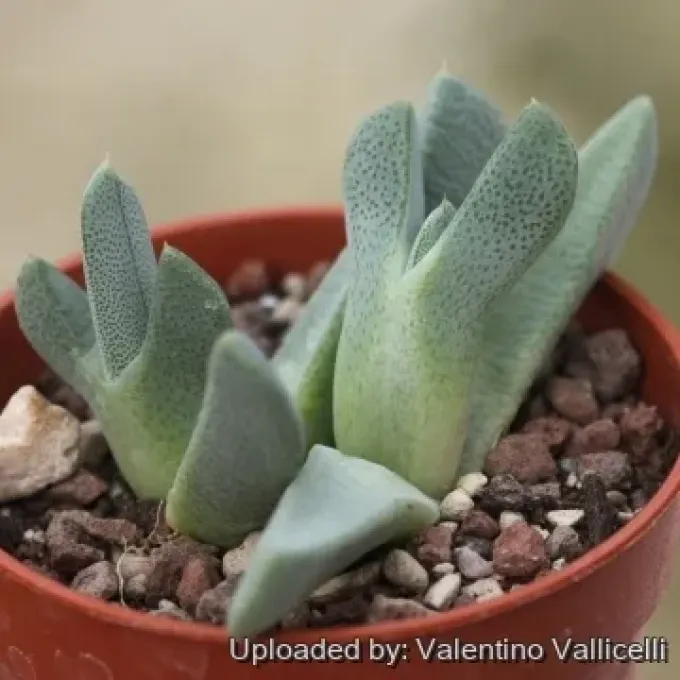
Description
Sowing dates
Propagation of Cheiridopsis gamoepensis by seed is typically performed in spring when daylight hours increase. Seeds require a well-draining, sandy medium to prevent damping-off, a common issue with delicate succulent seedlings.
Maintain a constant temperature between 20 and 25 degrees Celsius for optimal germination. Covering the container with plastic or glass helps to preserve the high humidity levels necessary for initial root development.
Once seedlings emerge, introduce gradual ventilation to harden the young plants. Overly humid conditions post-germination are detrimental, as they encourage rapid growth of pathogens that can destroy the entire batch.
Transplanting should be delayed until the seedlings have developed several true leaves. Use small pots to manage soil moisture effectively, as excessive volume of substrate often leads to water stagnation.
Handle seedlings with extreme care during transplanting to avoid damaging the taproot. Ensure that the potting mix remains consistent with that used during the initial sowing phase to prevent transplant shock.
Growing requirements
Belonging to the Aizoaceae family, this species thrives in arid, bright environments. It requires intense sunlight to maintain its characteristic compact, stone-like appearance, which is essential for its structural integrity.
The potting medium must be inorganic-heavy, consisting mostly of coarse sand, pumice, and grit. Peat-based soils are inappropriate as they retain water too long, which is a fatal flaw for this desert-adapted plant.
Watering practices must mimic the cycles of the South African arid regions. During the growing season, deep but infrequent watering is required, allowing the soil to dry out completely between each irrigation session.
Winter dormancy is critical for the plant's life cycle. During this period, the plant should be kept dry and in a cool environment, around 10 to 12 degrees Celsius, which allows the plant to conserve energy for blooming.
Fertilization should be handled sparingly. Using high-nitrogen fertilizers will result in etiolated, weak growth that is prone to disease and pest infestation, thus only specialized succulent-grade minerals are recommended.
Main diseases and pests
The primary threat to the health of this succulent is root rot, triggered by poor drainage or excessive watering. Once the stems begin to soften or turn dark, it is often difficult to save the specimen.
Mealybugs are the most common pest, often hiding in the crevices between leaves. They feed on plant sap, causing stunted growth and providing a breeding ground for secondary fungal infections due to their honeydew.
Spider mites can occur if the environment becomes too dry and stagnant. These microscopic pests leave minute spots on the leaves, which eventually turn into extensive scarring as the infestation progresses.
Scale insects present a significant challenge due to their protective shells. Manual removal or systemic insecticides are required to penetrate their defenses and eliminate them from the plant's surface.
Effective pest control depends on early detection and a regular inspection schedule. Maintaining excellent air circulation around the plants significantly reduces the likelihood of both fungal and pest outbreaks.