
Cheiridopsis caroli-schmidtii
Cheiridopsis caroli-schmidtii
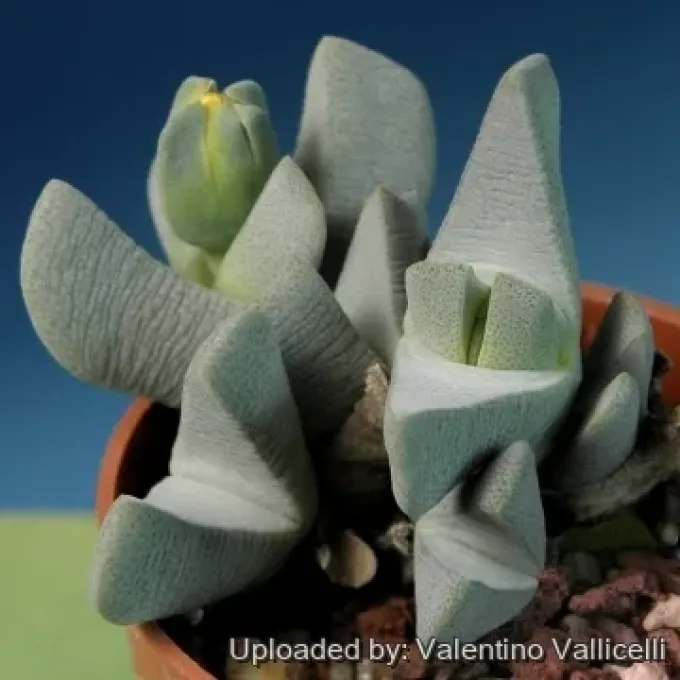
Description
Growing requirements
Cheiridopsis caroli-schmidtii belongs to the Aizoaceae family and is native to the arid landscapes of Namibia and South Africa. It is a highly specialized succulent adapted to survive in regions with minimal precipitation.
The plant is characterized by its pair of succulent leaves that grow in compact, rosette-like clusters. These leaves are designed to store water, allowing the plant to thrive during extended dry seasons characteristic of its natural habitat.
Cultivation requires exposure to full sun throughout the year. Providing sufficient light is critical, as it ensures the plant maintains its natural, compact habit rather than etiolating in search of more intensity.
The substrate must be highly porous and inorganic. A mixture of horticultural grit, coarse sand, and a small amount of potting soil is ideal to ensure that water drains rapidly and never accumulates around the root zone.
Temperature management follows a strict seasonal cycle. During the growing season, warm conditions are preferred, while the winter period necessitates a cool and completely dry environment to induce dormancy.
Main diseases and pests
The most significant threat to Cheiridopsis caroli-schmidtii is root rot, usually caused by overwatering or soil that retains moisture for too long. Proper drainage is the primary defense against this condition.
Mealybugs are the most common pests, often sheltering in the crevices between the leaves. Regular inspection of the plant's structure is necessary to catch and treat infestations early before they spread.
Spider mites can also become a problem in environments with low humidity and high heat. Keeping the plant in an area with good air circulation reduces the risk of these infestations occurring.
Fungal infections can occur if moisture remains on the foliage for extended periods. It is vital to water only the soil and keep the plant bodies dry to maintain optimal plant health.
If rot is detected, surgical removal of the decayed tissue followed by thorough drying and re-potting in fresh, sterile material is the only effective strategy to save the affected specimen.