
Cheiridopsis denticulata
Cheiridopsis denticulata
Description
Growing requirements
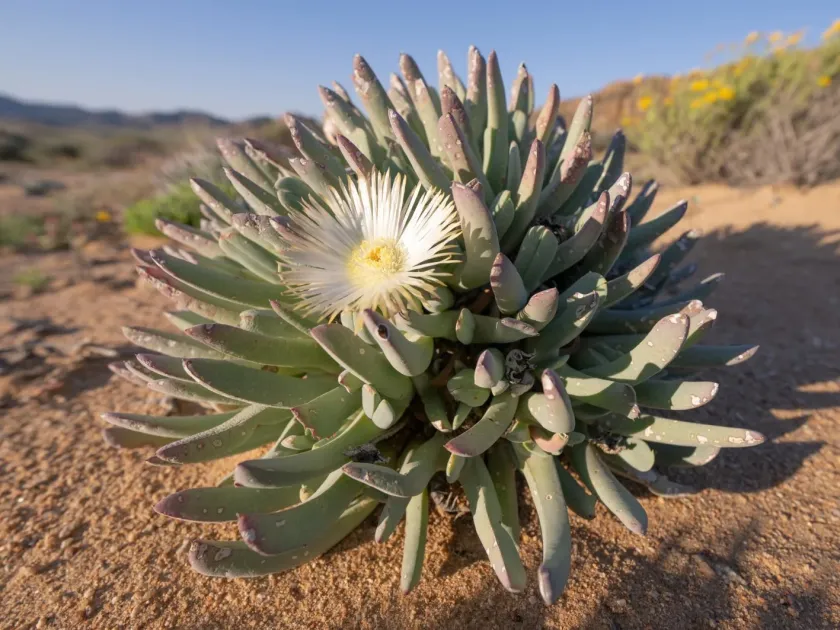
Cheiridopsis denticulata is a fascinating succulent belonging to the Aizoaceae family, naturally occurring in the arid, desert-like regions of South Africa where it thrives in harsh, sun-drenched environments.
The plant exhibits distinctive botanical traits, including pairs of fleshy, tooth-edged leaves that possess a grayish-green hue and a protective waxy bloom, which serves as an adaptation to minimize water loss.
For successful cultivation, this plant requires direct, intense sunlight for most of the day, as insufficient lighting results in etiolation, where the plant loses its natural, compact aesthetic form.
Soil requirements for Cheiridopsis are strict; it demands a highly porous, gritty medium that allows for rapid drainage, typically consisting of a mix of potting soil, coarse sand, and perlite or pumice.
Maintaining the proper temperature cycle is crucial: the plant undergoes a dormant period in winter, during which it needs significantly cooler temperatures and almost complete withdrawal of watering to survive.
Main diseases and pests
The primary threat to the health of Cheiridopsis denticulata is overwatering, which quickly causes the succulent tissues to saturate, rot, and fall prey to opportunistic fungal pathogens.
Mealybugs are the most common pests found on this plant, frequently settling in the tight crevices between leaves where they are difficult to remove and cause significant metabolic stress to the plant.
Spider mites can also be a challenge in low-humidity environments, manifesting as fine webbing and discoloration on the surface of the leaves, which significantly reduces the plant's overall vitality.
Management of these pests involves careful application of targeted insecticides while avoiding oily or soapy sprays that could permanently damage the delicate wax coating on the leaves.
- Use of terra-cotta pots to enhance evaporation of moisture from the root zone.
- Strategic watering cycles timed with the plant’s active growing season.
- Regular inspection of the plant base for any signs of softening or discoloration.