
Cheiridopsis pilosula
Cheiridopsis pilosula
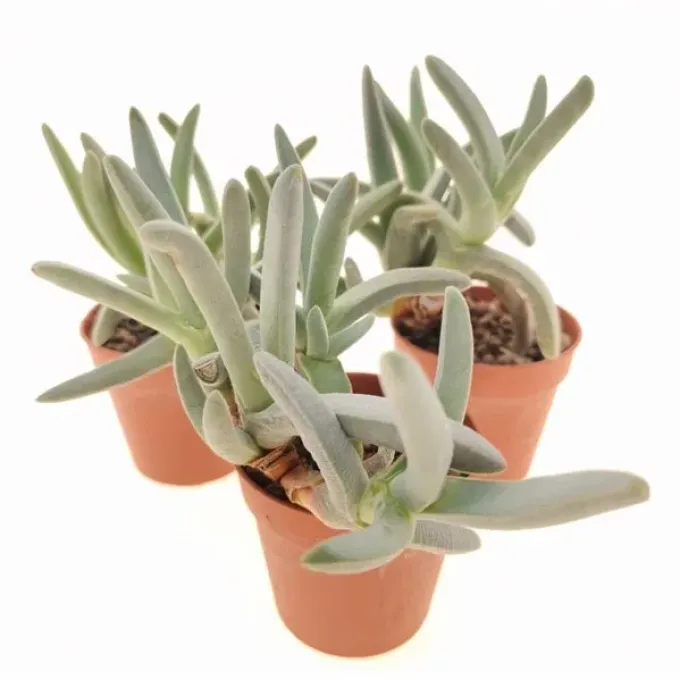
Description
Sowing dates
Sowing seeds of this species is best performed in late winter or early spring when natural light levels begin to increase. February and March are considered the ideal window for propagation.
For successful germination, use a loose, sandy substrate with excellent drainage. Spread the seeds on the moist soil surface without burying them, covering with a glass lid to maintain consistent humidity.
The optimal germination temperature ranges between +20 and +25 degrees Celsius. It is crucial to ventilate the containers daily once the seedlings emerge to prevent dampening off and fungal development.
Prick out the young seedlings only when they are robust enough and have developed their first set of true leaves. Since the plant grows quite slowly, patience is essential during the initial development phase.
After transplanting, gradually acclimate the seedlings to ambient humidity levels by removing the cover in stages. Move to individual permanent pots only once the root system has filled the container.
Growing requirements
Cheiridopsis pilosula belongs to the Aizoaceae family and originates from the arid regions of South Africa. This succulent is highly adapted to extreme solar radiation and sparse rainfall.
The plant demands intense light to thrive, making it suitable for southern-facing windows or greenhouses with supplemental grow lights. Low light conditions cause stretching and loss of compact growth.
The soil must be purely mineral-based, porous, and well-draining, with a neutral to slightly acidic pH. A mix of potting soil, coarse sand, and perlite is generally recommended.
Watering must be strictly controlled, applying water only after the substrate has dried out completely. During the winter dormancy period, watering should be reduced to an absolute minimum.
Summer temperatures should remain between +22 and +30 degrees Celsius. Providing a cooler rest period in winter, ideally between +10 and +15 degrees, is vital to encourage future flowering.
Main diseases and pests
Root rot is the primary threat to the plant, usually caused by overwatering or poor drainage. If the leaves become soft and mushy, irrigation should be suspended immediately to allow the roots to dry.
Mealybugs are the most common pests, often hiding in the crevices of the succulent leaves. They should be managed using targeted insecticide treatments or manual removal for localized infestations.
Spider mites may appear if the ambient air is excessively dry. Regular inspection of the plant's undersides and maintaining proper hygiene in the growing area helps prevent significant outbreaks.
Fungal infections are treated with broad-spectrum fungicides if prevention fails. It is important to ensure water does not splash onto the foliage during watering to avoid rotting the tissues.
Disease prevention relies primarily on ensuring constant fresh air circulation. Stagnant, humid air is the main trigger for most physiological and infectious issues in succulent collections.