
Cheiridopsis rudis
Cheiridopsis rudis
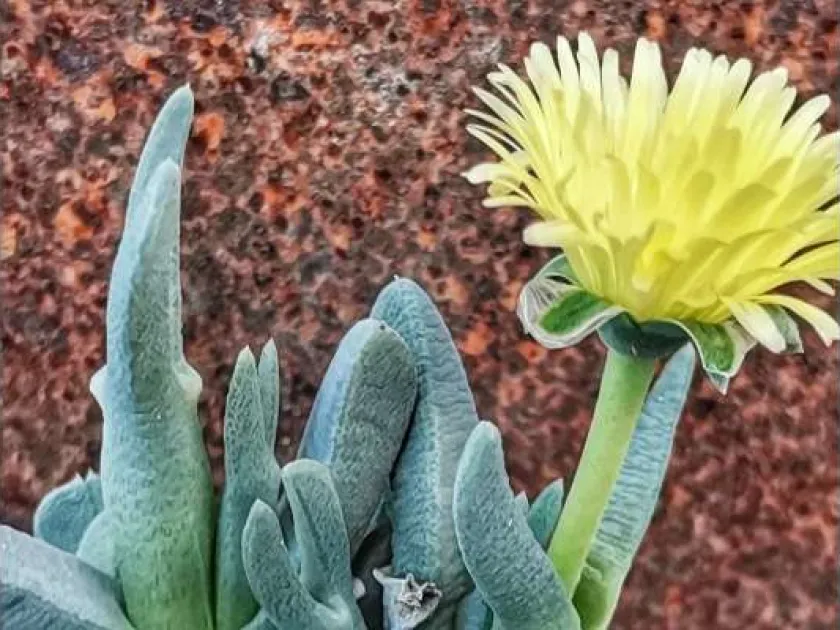
Description
Growing requirements
Cheiridopsis rudis is a perennial succulent plant belonging to the Aizoaceae family. It is native to the arid regions of Southern Africa, where it has evolved to survive in highly sandy and nutrient-poor environments with minimal rainfall.
The plant features distinctively fleshy, opposite leaves that develop into a compact, rosette-like form. These leaves are covered in a cuticle layer that helps the plant manage its water reserves, making it highly drought-resistant in its natural habitat.
Cultivation requires a highly porous and inorganic soil medium. A standard mixture should include coarse sand, pumice, or expanded clay to ensure rapid drainage, as the roots are extremely prone to asphyxiation in water-logged soils.
Environmental requirements include a high intensity of direct sunlight to maintain the plant's natural compact shape. In commercial or collection settings, providing adequate light levels is critical to prevent etiolation and maintain plant health.
Temperature management should follow a seasonal cycle. The plant prefers warm days and significantly cooler nights, which mimics the natural diurnal temperature variations found in its native Namaqualand range.
Main diseases and pests
The primary threat to the health of Cheiridopsis rudis is excessive moisture, which leads to rapid decay of the root system and basal tissue. This is often caused by inappropriate irrigation timing or poor soil drainage properties.
Mealybugs are the most common pests found in agricultural settings, frequently hiding within the leaf axils where they remain protected from surface-applied pesticides. Systemic insecticides are recommended for effective control.
Spider mites can become a problem in environments with low humidity and high temperatures. Regular inspection of the plant surfaces is necessary to catch infestations early before they lead to significant leaf scarring.
Fungal infections, particularly root rot, are often opportunistic and appear when the plant is stressed by lack of proper ventilation. Maintaining high air circulation around the plants significantly reduces the risk of such outbreaks.
Nutrient toxicity, especially from over-fertilization, can weaken the plant's resistance. Growers should use fertilizers sparingly, focusing on formulations with low nitrogen content to avoid encouraging weak, succulent growth.