
Cereus vargasianus
Cereus vargasianus
Description
Growing requirements
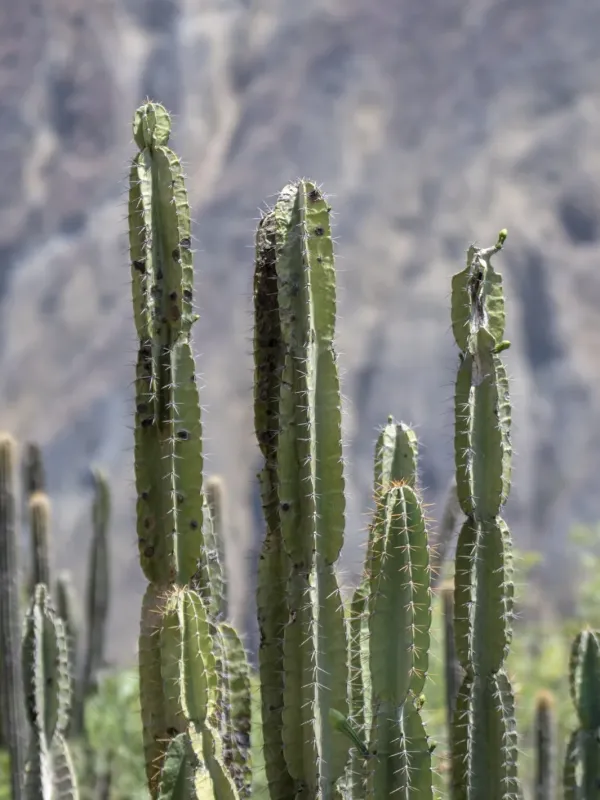
Cereus vargasianus is a striking columnar cactus species belonging to the Cactaceae family. Known for its robust growth habit and architectural form, this plant thrives in arid environments, showcasing the incredible adaptability of the Cereus genus to harsh ecological niches.
Originating from the mountainous and arid regions of Peru, this species is well-adapted to environments characterized by intense solar radiation and minimal rainfall. Its natural habitat is typically rocky and well-drained, which dictates the specific requirements for its successful cultivation.
Regarding cultivation requirements, full sun exposure is non-negotiable. To achieve optimal growth and maintain the structural integrity of the columns, the cactus requires high light intensity throughout the year, making greenhouse or outdoor cultivation in sunny climates ideal.
The soil must be inorganic-based, typically a mix of sharp sand, perlite, and coarse grit. This structure ensures that water drains away from the roots almost immediately, preventing the accumulation of moisture that could lead to the death of the root system.
Temperature management follows the cycle of the plant's native region. During the growing season, warm temperatures between 22 and 30 degrees Celsius are required. Conversely, winter dormancy requires a cooler period with significantly reduced light and water to simulate the natural cooling of the desert night.
Main diseases and pests
Fungal rot is the most significant threat to Cereus vargasianus, usually manifesting as dark, mushy spots on the base of the cactus. This is almost always caused by overwatering or soil that retains moisture for too long, allowing pathogens to penetrate the plant tissues.
Mealybugs are the most common insect pest, frequently found hiding in the deep folds between the ribs of the cactus. These sap-sucking insects extract nutrients and secrete sticky honeydew, which often encourages the growth of unsightly sooty mold on the surface of the plant.
Spider mites can also be problematic, particularly in indoor environments with low humidity. They feed on the epidermis, creating discolored, scaly patches that mar the beauty of the cactus and provide entry points for secondary bacterial infections.
Integrated pest management is essential for this species. Using systemic insecticides can help control mealybugs, while maintaining good airflow around the plant helps prevent both fungal outbreaks and mite colonization, reducing the need for constant chemical treatment.
Careful observation is the best defense. Checking the plant during every watering session allows for early detection of potential issues. If rot is spotted, cutting the affected area back to healthy tissue and allowing it to callous over is the only way to save the specimen.