
Cereus hybrids
Cereus hybrids
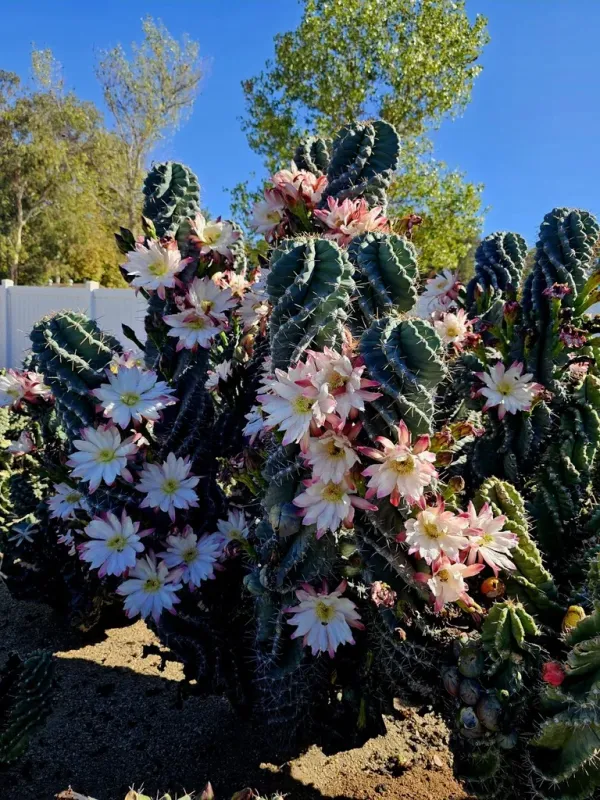
Description
Growing requirements
Cereus hybrids belong to the Cactaceae family and are the result of selection across various species of the Cereus genus. These are perennial succulent plants valued for their ornamental appeal, robust columnar form, and ability to adapt to home or greenhouse environments.
For successful growth, hybrids require bright solar illumination, especially during the active vegetation phase. If light levels are insufficient, stems tend to etiolate, losing their natural shape and tissue density, which negatively affects the overall stability of the plant.
The optimal temperature range for this culture varies between +20°C and +30°C during the summer. In winter, plants require a dormancy period at temperatures around +10...+15°C, which is essential for flower bud formation and maintaining a healthy biological cycle.
The soil mixture must be loose, well-aerated, and possess a slightly acidic or neutral pH. Specialized cactus substrates consisting of sod soil, coarse sand, perlite, and charcoal are ideal to prevent root rot and ensure proper drainage.
Watering should be moderate, allowing the top layer of soil to dry out completely between irrigation sessions. During winter, watering is reduced to a minimum to maintain tissue turgor only, preventing fungal infections caused by excessive moisture.
Main diseases and pests
The primary pests affecting Cereus hybrids are mealybugs and spider mites. These insects often attack the stems under low-humidity conditions, extracting cellular sap and significantly weakening the plant's immune system.
Root rot is the most serious threat, resulting from stagnant water in the root zone. It is typically caused by pathogenic fungi that rapidly destroy the vascular system of the succulent.
Control methods involve the application of systemic insecticides and acaricides. It is critical to initiate treatment at the first signs of infestation to stop the spread of insect colonies to neighboring specimens.
Disease prevention consists of maintaining proper aeration and ensuring the quality of irrigation water. Utilizing effective drainage systems and soil sterilization prior to planting significantly reduces the risk of infection.
If soft spots or dark blemishes are detected on the stem, immediate surgical intervention is required: excise the affected tissue down to the healthy area and treat the cut with a fungicide or activated charcoal.