
Blue Cereus
Cereus glaucus
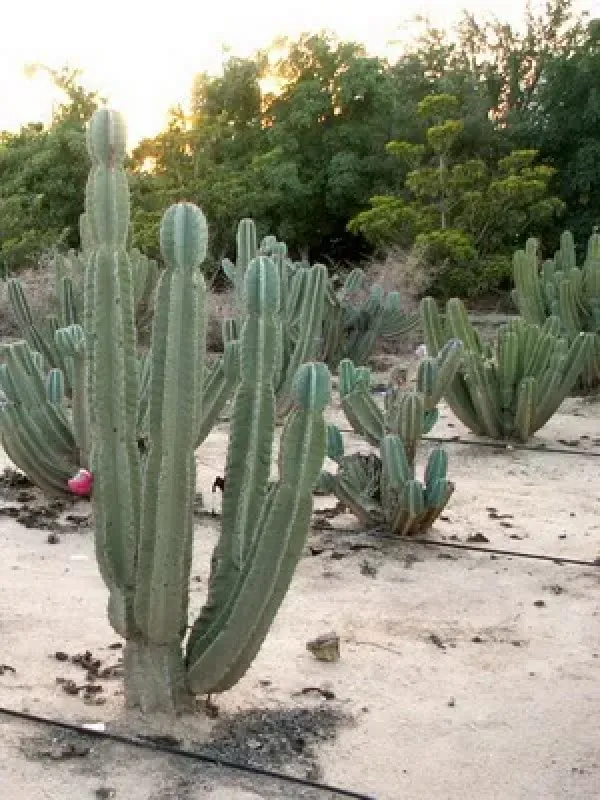
Description
Sowing dates
Propagation of the Blue Cereus is commonly achieved through seeds sown during the spring season to benefit from increasing daylight and warmth.
Seeds require a well-draining, loose substrate consisting of sand and fine grit to ensure proper moisture management during the germination phase.
Vegetative propagation via stem cuttings is also frequently utilized, provided the cuttings are allowed to callous before being planted into the growing medium.
Optimal temperatures for root development and germination range between 22 and 25 degrees Celsius, maintaining consistent but not excessive moisture.
Young plants should be hardened off before being exposed to intense full sunlight to prevent epidermal sunscald during their initial development phase.
Growing requirements
The Blue Cereus belongs to the Cactaceae family, known for its distinct glaucous coating on the stem, which helps the plant reflect intense solar radiation.
This species thrives in arid to semi-arid climates, requiring high light intensity and long daylight hours to maintain its natural blue-green coloration.
Soil requirements focus on extreme porosity, as the plant cannot tolerate waterlogged conditions, which lead to rapid tissue decay and root rot.
The agronomic regimen involves active watering during the summer growth phase, followed by a dry, cool rest period during the winter months.
Proper aeration around the plant is essential, as the Blue Cereus is highly susceptible to fungal infections if cultivated in stagnant or humid environments.
Main diseases and pests
Root rot is the most common threat, usually caused by overwatering or soil mixes that hold moisture for too long, leading to a breakdown of the root system.
Mealybugs are prevalent pests that infest the ribs of the cactus, extracting vital plant sap and leaving behind cottony deposits that damage the skin.
Spider mites can become a significant issue in low-humidity conditions, creating webbing and causing discolored, dry patches on the plant's surface.
Scale insects can attach themselves to the stem, necessitating systemic insecticide treatments or manual removal to maintain the health of the cactus.
Good phytosanitary practices, such as sterilizing tools and inspecting new plants before introduction, remain the best defense against pests and diseases.