
Wight's paintbrush
Castilleja wightii
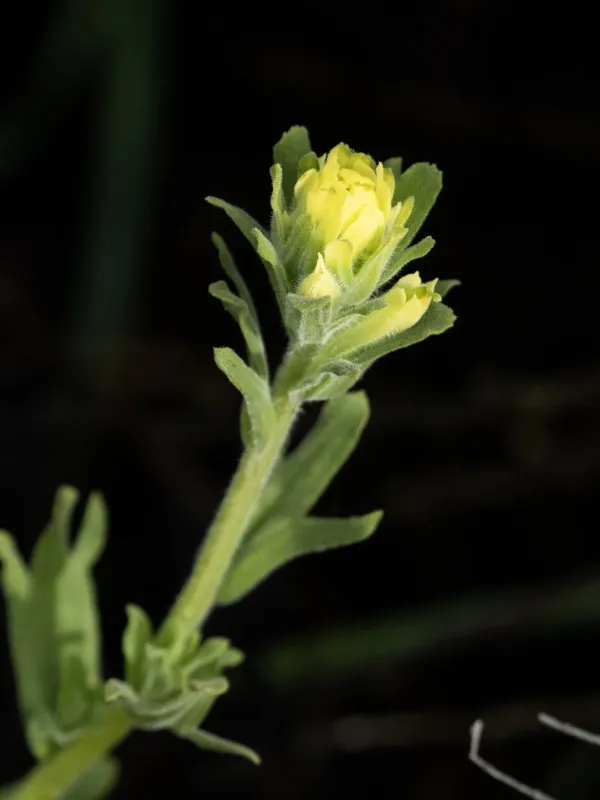
Description
Growing requirements
Wight's paintbrush (Castilleja wightii) is a perennial herbaceous plant member of the Orobanchaceae family. It is native to the coastal regions of California, where it is commonly found in sandy dunes and coastal scrub habitats.
This species is a hemiparasite, meaning it can perform photosynthesis but obtains a significant portion of its water and nutrients by attaching its roots to the root systems of surrounding host plants.
Successful growth of this plant depends entirely on its environment. It requires full sunlight and well-drained, sandy soils that mimic its natural habitat to prevent the root rot commonly associated with moisture stagnation.
Cultivation practices must include providing adequate host plants, such as specific native grasses or small shrubs, which are essential for the survival of the hemiparasitic Castilleja.
The plant is well-adapted to maritime conditions, showing resilience to salt spray and strong coastal winds, which makes it a unique candidate for specific ecological restoration projects.
Main diseases and pests
The primary threat to Castilleja wightii populations is the destruction of coastal dune habitats due to urban development and high levels of recreational traffic in natural areas.
Fungal pathogens represent a significant risk, particularly during periods of high humidity or excessive irrigation, which can lead to the rapid decline of the plant tissue.
Pests such as aphids and various larvae can damage the foliage and stems, though in healthy ecosystems, these are often kept in check by natural predators.
Poor soil aeration can further predispose the plant to infections, as hemiparasitic roots require specific soil chemistry to maintain their attachment to host plants.
Management efforts focus on protecting existing stands and ensuring that host plant species are present and healthy within the restoration zone to prevent nutrient stress.