
Castilleja exserta
Castilleja exserta
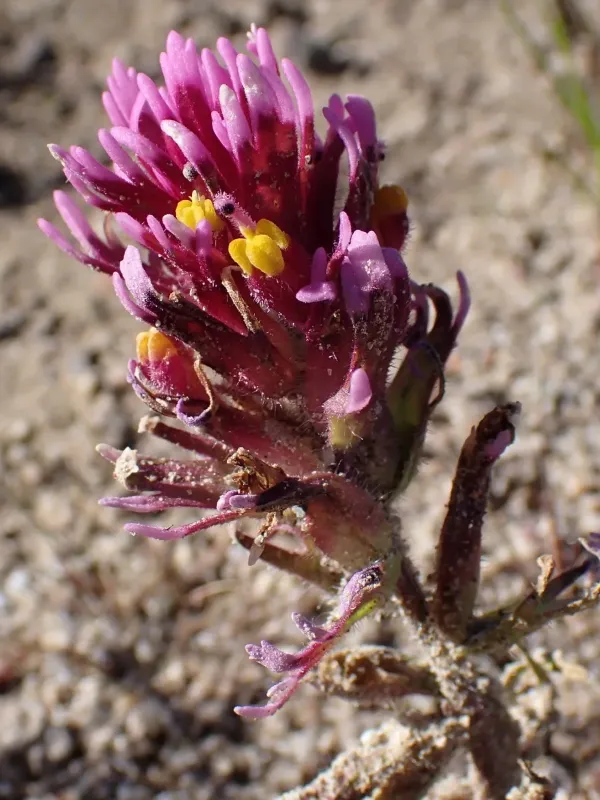
Description
Sowing dates
Castilleja exserta, commonly known as Purple Owl's-clover, is an annual plant that relies on natural climatic cues for germination. In its native habitat, seeds typically germinate in the fall or early winter after being exposed to moisture and cool temperatures.
For cultivation purposes, direct sowing in late autumn is recommended. The seeds require a period of stratification to break dormancy. If sowing in the spring, seeds must be pre-chilled in a refrigerator for several weeks to mimic natural winter conditions.
As a hemiparasitic species, it is essential to sow the seeds in close proximity to a suitable host plant. Preferred hosts often include native grasses or other wildflowers that provide the necessary root connections for the seedlings to thrive.
When seeding, do not cover the seeds with deep soil layers. They need exposure to sunlight for successful germination. Pressing them lightly into the surface is sufficient to ensure good contact with the substrate while allowing light penetration.
Proper spacing is crucial to balance the needs of the host plants and the Castilleja. Overcrowding can lead to excessive competition, which may weaken the host and, consequently, prevent the Castilleja from reaching its full potential.
Growing requirements
Belonging to the Orobanchaceae family, Castilleja exserta is native to western North America. It is commonly found in open meadows, coastal grasslands, and arid slopes, where it has adapted to survive by tapping into the roots of neighboring plants.
The defining botanical trait of this species is its hemiparasitic nature. It possesses haustoria, root structures that penetrate the host's roots to obtain water and essential nutrients, allowing it to survive in environments that would otherwise be too harsh.
The plant thrives in full sun exposure. Adequate light is necessary for the production of its signature colorful bracts, which are often mistaken for flowers. In shaded conditions, the plant becomes leggy and produces fewer, less vibrant blooms.
Soil requirements focus primarily on excellent drainage. The species is highly sensitive to saturated soil, which can lead to rapid root rot. It prefers sandy or loamy textures that do not hold excessive moisture for long periods.
Temperature and humidity play a significant role in its development. It is well-adapted to Mediterranean-style climates characterized by wet, mild winters and dry, warm springs. Excessive humidity during the flowering stage is detrimental and often leads to fungal issues.
Main diseases and pests
Root rot is the most significant threat to Castilleja exserta. It is almost exclusively triggered by improper drainage or overwatering. Once root rot takes hold, it is difficult to remediate, and prevention through site selection is the primary management strategy.
Powdery mildew can affect the foliage and stems when plants are grown in poor airflow conditions or when humidity levels remain high for extended periods. Pruning surrounding vegetation to improve air circulation is a recommended cultural control.
Aphids are the most common insect pest. They tend to congregate on the flower spikes, draining fluids and causing the bracts to wilt or become misshapen. Regular inspection and the use of gentle insecticidal soaps can manage these populations.
Nematode infestations can interfere with the parasitic link between the Castilleja and its host. If the host plant is damaged, the Castilleja will lose its primary source of water, leading to stunted growth or complete plant death.
Slugs and snails can cause severe damage to succulent seedlings during the early growing season. Using physical barriers, such as copper tape or coarse sand around the base of the plants, can help protect the young specimens until they are better established.