
Castilleja indivisa
Castilleja indivisa
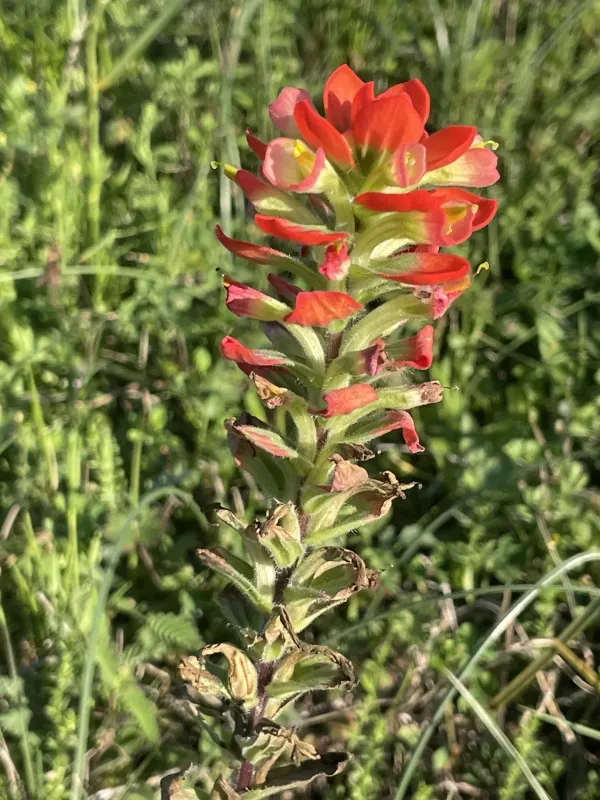
Description
Sowing dates
Castilleja indivisa, commonly known as the Indian paintbrush, belongs to the Orobanchaceae family. As a hemiparasite, its propagation is unique and requires specific environmental conditions to succeed.
Seeds are best sown in the fall, allowing for natural winter cold stratification. They require surface sowing or very shallow coverage, as light is a critical factor for the successful germination of this species.
Fresh seeds are highly recommended, as the viability of Castilleja indivisa seeds drops significantly when stored for prolonged periods. Sowing should be done in permanent spots to avoid root damage.
A crucial agrotechnical step is the presence of a host plant. Without nearby grasses, such as Bouteloua or Festuca species, the seedlings will struggle to establish and may fail to survive beyond the early stages.
Successful establishment depends on the seedlings' roots connecting with the host roots. This symbiotic-like relationship allows the paintbrush to thrive in varied environmental conditions despite its limited chlorophyll capacity.
Growing requirements
This species thrives in full sun exposure. Inadequate light levels significantly impact the vibrant red pigmentation of the bracts, which serve as the primary attraction for pollinators.
Soil requirements focus on excellent drainage. Castilleja indivisa is highly susceptible to root rot caused by waterlogging, making sandy or rocky soil types the ideal medium for cultivation.
The plant performs well in low-nutrient, unamended soils. High nitrogen levels from commercial fertilizers can suppress the parasitic root development and lead to succulent growth prone to pathogens.
Climatic adaptation is centered on the native prairie conditions, characterized by seasonal moisture variability. It demonstrates high drought tolerance once the root system has successfully established connection with a host.
A neutral to slightly acidic pH range is preferred for optimal growth. Providing a setting that mimics a wildflower meadow, with low competition from dense weeds, will ensure the best appearance.
Main diseases and pests
Fungal diseases are the primary threat, especially in humid conditions or poorly drained environments. Damping-off and root rot are common issues for young seedlings struggling to find host plants.
Pests such as aphids and spider mites can infest the foliage, particularly during extended dry spells. These pests weaken the plant, making it susceptible to secondary infections or failure of the host connection.
The health of the surrounding host grasses is vital. If the host plant is stressed by drought or disease, the Castilleja indivisa will immediately experience nutrient deficiencies and stunted growth.
Maintaining proper air circulation around the plants is essential for disease prevention. Dense plantings should be avoided to prevent the buildup of fungal spores and moisture accumulation.
Biological controls are preferred over broad-spectrum pesticides, as the plant's delicate root and hemiparasitic nature make it sensitive to heavy chemical applications during the growing season.