
Castilleja integrifolia
Castilleja integrifolia
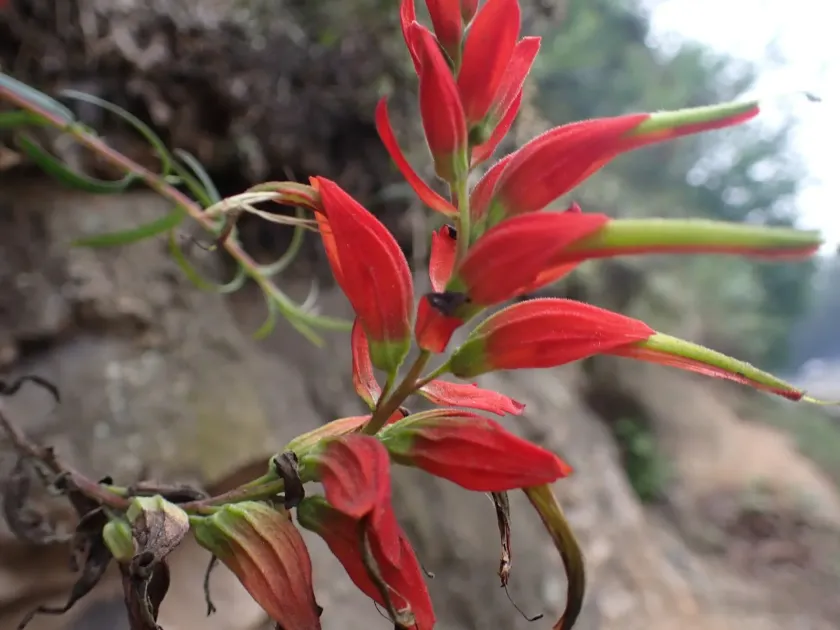
Description
Growing requirements
Castilleja integrifolia is a perennial herbaceous plant belonging to the Orobanchaceae family. This species is biologically classified as a hemiparasite, meaning it can photosynthesize but relies on host plants for some of its nutrients and water.
The native range of this plant is centered in the mountainous regions of the Americas. It is typically found in habitats with well-drained soils, where it can establish root connections with surrounding native flora to thrive in nutrient-poor conditions.
Its botanical structure includes entire leaves and vibrant, showy bracts that often mask the true flowers. The root system is specialized, featuring haustoria that tap into the vascular systems of host plants to facilitate the exchange of water and minerals.
Successful cultivation requires selecting appropriate host companion plants in the soil environment. It demands high solar exposure and prefers poor, rocky, or sandy substrates that prevent water retention and promote deep root aeration.
Management of this crop involves minimal human intervention once established, as it is naturally adapted to rugged terrain. However, during the initial planting phase, it is vital to ensure that the relationship between the parasite and the host is stable for long-term survival.