
Woolly Indian paintbrush
Castilleja foliolosa
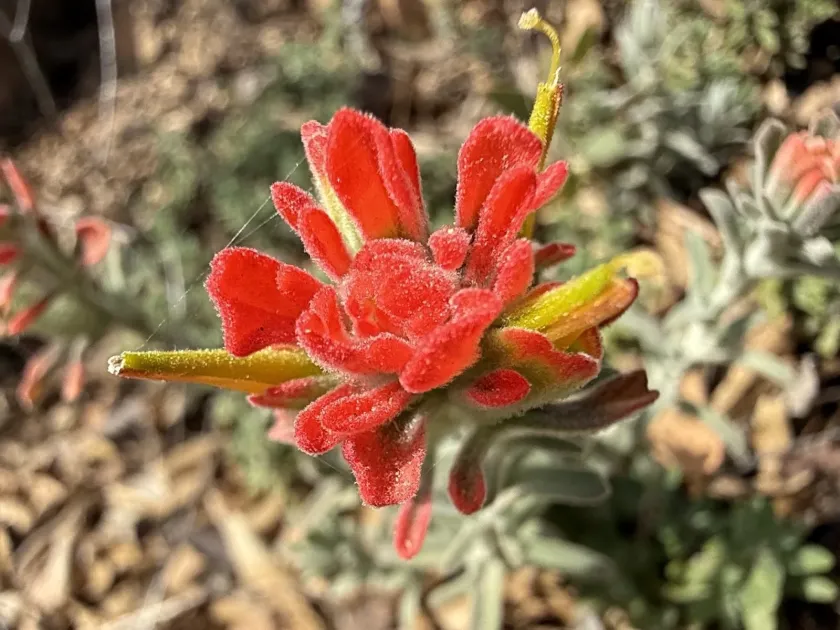
Description
Growing requirements
The Woolly Indian paintbrush (Castilleja foliolosa) belongs to the Orobanchaceae family. This perennial herb is native to California and parts of the Southwestern United States, thriving in rocky, arid landscapes.
Botanically, it is a hemiparasitic plant. This means it contains chlorophyll and can perform photosynthesis, but it also extracts additional water and nutrients from the root systems of neighboring host plants through specialized structures called haustoria.
The plant is highly drought-tolerant, characterized by its dense, woolly, silver-gray foliage that helps minimize water loss. It requires well-draining, rocky soils and is well-adapted to the hot, dry summers typical of its native Mediterranean-like climate.
Cultivation success heavily depends on the presence of appropriate host plants. In nature, it commonly parasitizes various shrub species, such as Artemisia. Gardeners must ensure a compatible host is established nearby before introducing the paintbrush.
Full sun is essential for the healthy development of this species. In shaded or overly crowded environments, the plant struggles to produce its signature vibrant bracts, which often range from deep red to orange in color.
Main diseases and pests
Root rot is the most common threat to this species, primarily caused by over-irrigation or soil that retains too much moisture. Proper drainage is the single most important factor in preventing fungal infections in the root zone.
Sucking insects, including aphids, can attack the plant during periods of stress. While the plant is hardy, heavy infestations can reduce its vigor and diminish the quality of its striking floral displays.
The loss of a suitable host plant is a critical survival risk. If the host plant dies or is outcompeted, the dependent Castilleja foliolosa will inevitably decline, as it relies on the host for vital nutrient supplementation.
Invasive weeds can create unwanted competition for resources. However, care must be taken when weeding around the plant, as accidental damage to the root connections between the paintbrush and its host can be fatal to the parasite.
Poor soil aeration can also lead to weakened growth. Since the species is accustomed to loose, rocky substrates, compact or clay-heavy soils significantly increase the risk of disease and stunted development.