
Suksdorf's Indian paintbrush
Castilleja suksdorfii
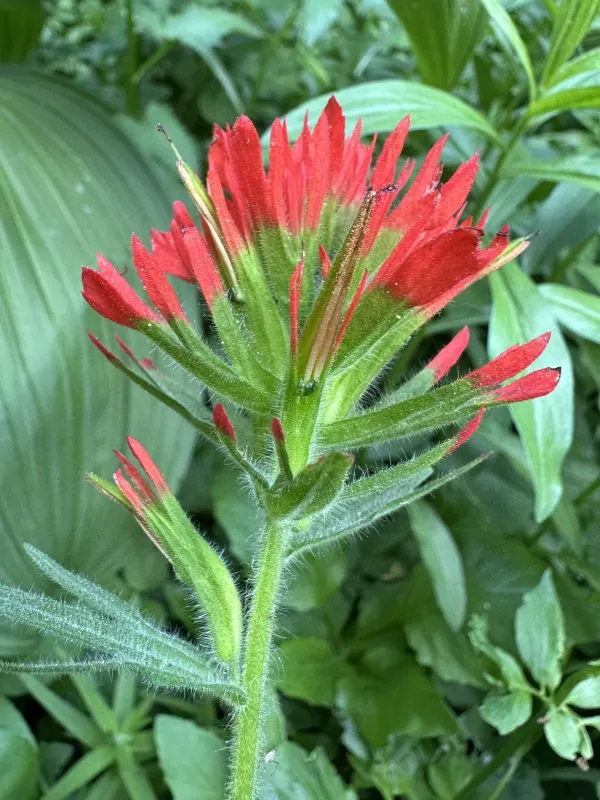
Description
Growing requirements
Suksdorf's Indian paintbrush (Castilleja suksdorfii) is a member of the Broomrape family (Orobanchaceae). It is a perennial herbaceous plant known for its hemiparasitic nature, drawing nutrients and water from the roots of neighboring host species.
The species is native to western North America, particularly mountain ranges such as the Cascades. It typically inhabits moist meadows and alpine environments where soil moisture remains consistent throughout the growing season.
Botanically, the plant is recognized by its vibrant red or orange bracts, which are often mistaken for flower petals. The actual flowers are small and inconspicuous, protected by these colorful structures to attract specialized pollinators.
Agronomically, this species requires very specific conditions to thrive, including access to appropriate host plants. Attempting to grow it in sterile or monoculture environments usually results in poor development and high mortality rates.
Its primary use is in specialized botanical gardens or restoration projects aimed at preserving native wildflower biodiversity. Due to its complex life cycle, it is rarely grown as a standard agricultural crop.
Main diseases and pests
The plant is highly susceptible to root-related pathogens, especially those triggered by waterlogged soils, such as root rot and phytophthora species.
Common pests affecting this species include aphids and spider mites, which feed on the sap and can severely weaken the plant during its active development phase.
Soil-borne nematodes can cause significant damage to the root system, which is especially detrimental for a hemiparasite that relies on root connections for survival.
Environmental stress, such as prolonged drought or extreme heat, often causes the plant to wither prematurely, affecting seed set and reproduction.
Invasive weed species can outcompete Suksdorf's Indian paintbrush for sunlight and nutrient resources, leading to a decline in population density.