
Raup's Indian paintbrush
Castilleja raupii
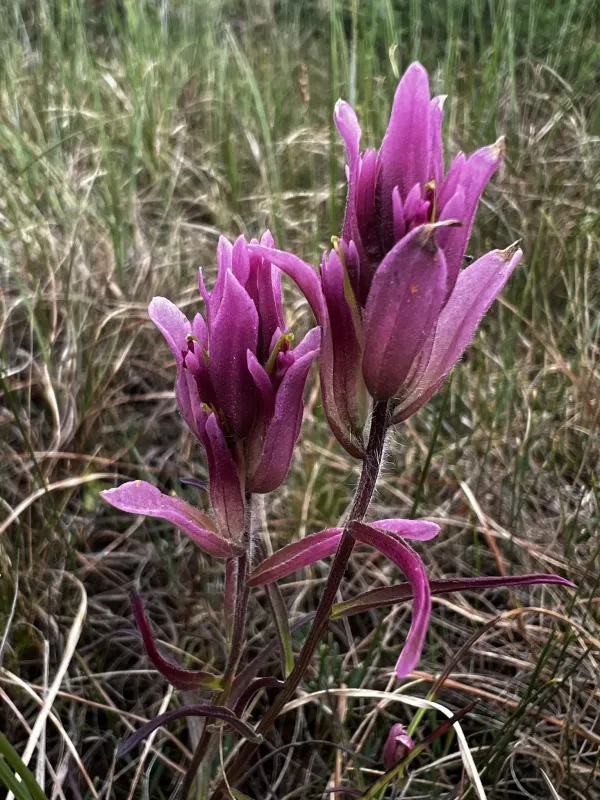
Description
Growing requirements
Raup's Indian paintbrush (Castilleja raupii) is a perennial herbaceous plant belonging to the Orobanchaceae family. This species is recognized as a hemiparasite, meaning it derives some of its nutrients by attaching its roots to the roots of neighboring host plants.
The native range of this plant is restricted to the northern parts of North America, specifically subarctic regions of Canada and Alaska. It is uniquely adapted to thrive in harsh, cold environments where the growing season is notably brief.
Regarding soil requirements, the species flourishes in well-drained, sandy, or gravelly soils. It is frequently found on river banks and open, rocky meadows where soil aeration is high and water does not stagnate, which is vital for the plant's health.
Climate tolerance is one of the key features of Castilleja raupii. It is highly resistant to extreme cold and late-season frosts. The plant requires significant sunlight exposure and struggles to survive in canopy-covered or overly crowded habitats.
Due to its complex ecological requirements and obligate hemiparasitic nature, this plant is not cultivated for agricultural purposes. It remains a subject of botanical interest for ecological studies and conservation efforts in northern climates.
Main diseases and pests
The primary threats to Castilleja raupii include the degradation of riverine habitats and soil erosion. Since the plant relies on specific substrate stability, any disturbance to these areas can lead to population loss.
Fungal diseases are a potential risk, particularly during unseasonably warm and wet spells, which promote the growth of pathogens that can compromise the root systems or the photosynthetic tissues of the plant.
Insects that feed on the bracts and floral structures can negatively impact reproductive success, reducing seed dispersal rates for the following season.
Climate change poses a long-term threat as shifting vegetation patterns may cause the decline of the host plants upon which Castilleja raupii depends for its survival.
As a specialized species, it lacks the resilience found in generalist weeds, making it highly susceptible to local environmental changes and habitat fragmentation.