
Western Indian Paintbrush
Castilleja occidentalis
Description
Growing requirements
Western Indian Paintbrush, known scientifically as Castilleja occidentalis, belongs to the Orobanchaceae family. This perennial herb is recognized as a hemiparasite, meaning it derives partial nourishment from the roots of neighboring vegetation while still performing photosynthesis.
The native range of this species is confined to high-elevation mountain habitats in North America. It is typically found in alpine and subalpine meadows, thriving in harsh environments where soil nutrients are scarce and the growing season is exceptionally short.
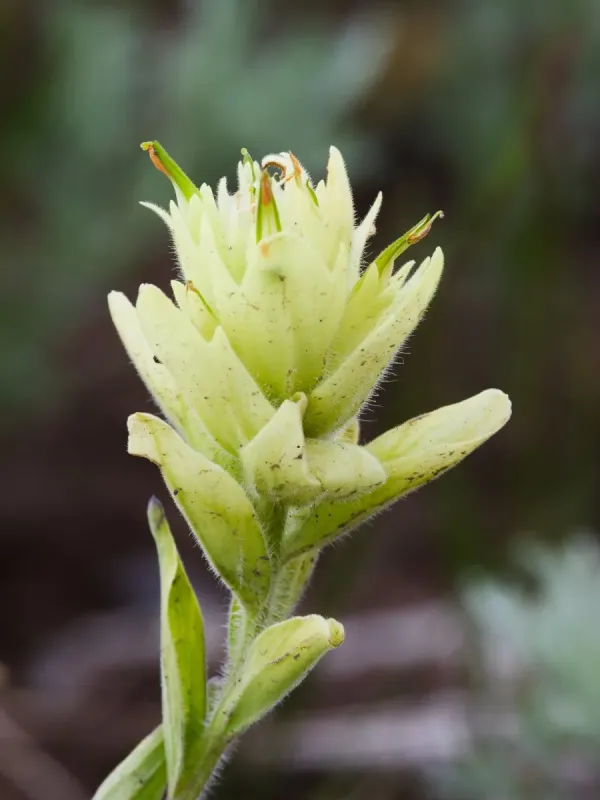
Botanically, the plant is distinguished by its conspicuous, brightly colored bracts that protect the small, greenish-yellow flowers. These bracts serve as primary visual attractants for pollinators, compensating for the lack of showy floral petals typical of other meadow plants.
Cultivation of this species presents significant challenges due to its obligatory parasitic relationship with host plants. In an environment lacking appropriate root systems of hosts, the plant will fail to thrive or complete its life cycle, making it unsuitable for traditional agriculture.
In terms of ecological importance, the plant is a critical component of alpine biodiversity. Its management is focused on habitat conservation rather than commercial production, as the species relies on specific soil conditions and biological interactions to maintain its population in the wild.