
Scarlet paintbrush
Castilleja miniata
Description
Growing requirements
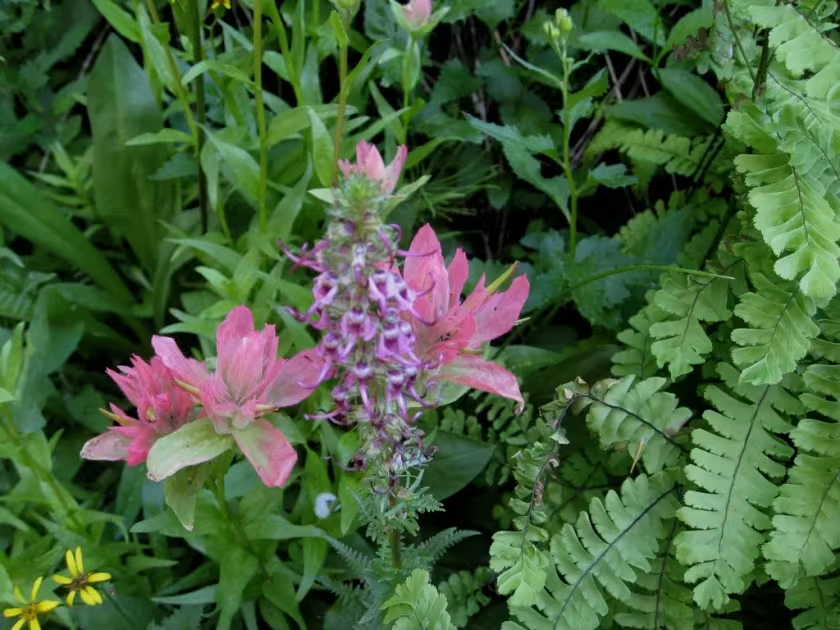
Scarlet paintbrush (Castilleja miniata) is a perennial herbaceous plant belonging to the Orobanchaceae family. Native to western North America, this species is commonly found in mountainous meadows, forest clearings, and rocky alpine slopes.
A distinctive feature of this plant is its hemiparasitic lifestyle. It requires connection to the roots of host plants, typically grasses, via haustoria to supplement its nutrient and water intake, although it retains the ability to photosynthesize.
In terms of soil and environmental requirements, the plant demands well-drained, porous soils. It is highly sensitive to waterlogged conditions, which often cause rapid root decay and plant mortality.
The plant thrives in full sun to partial shade. Proper light exposure is essential for the development of its iconic, vibrant red or orange-red bracts, which are often the primary aesthetic feature in ornamental cultivation.
Successful management requires careful site selection. Cultivators must ensure the presence of suitable host companion plants during planting to support the establishment of the paintbrush’s root system in the early stages of development.
Main diseases and pests
The primary horticultural challenge is managing soil moisture levels to avoid root rot, which remains the most significant threat to the health of the population.
Common pests include aphids and mites, which can infest the succulent leaves and flower spikes, causing deformation and reducing the overall decorative quality.
Invasive weeds can easily suppress the growth of the scarlet paintbrush by shading them out or competing with the host plants for soil resources.
Pathogenic fungi may thrive if airflow is restricted, so planting at appropriate densities is recommended to minimize disease transmission.
Regular inspection is advised, particularly during the transition from spring to summer, to identify any signs of pest activity or nutrient stress early.