
Wyoming Indian paintbrush
Castilleja linariifolia
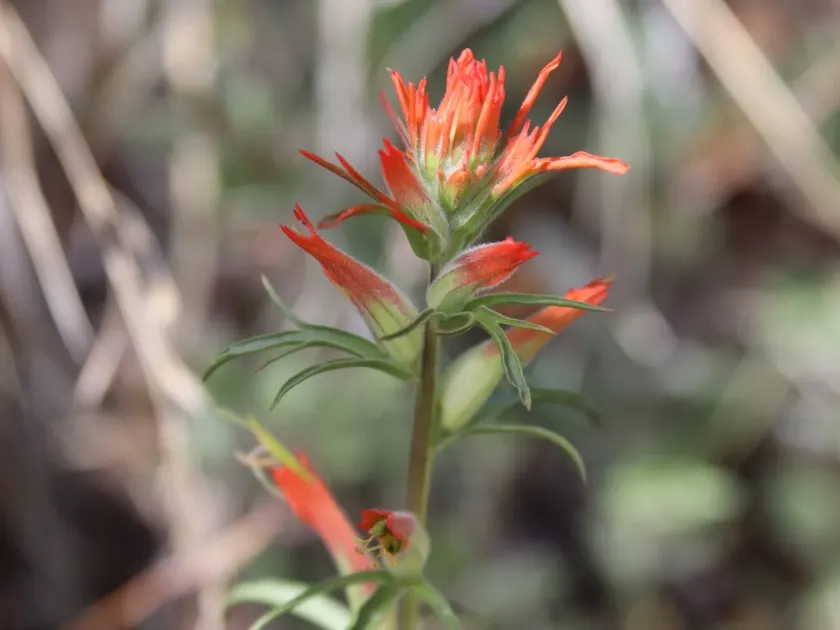
Description
Growing requirements
The Wyoming Indian paintbrush, scientifically known as Castilleja linariifolia, is a perennial hemiparasitic herb belonging to the Orobanchaceae family. It is widely recognized as the state flower of Wyoming and is a hallmark of the western North American landscape.
As a hemiparasite, the plant relies on haustorial connections to the roots of host plants, primarily sagebrush species (Artemisia), to supplement its water and nutrient uptake. This biological dependency is critical for its health and lifecycle.
Cultivation requires well-draining, rocky, or sandy soils that mimic its natural mountainous or steppe habitat. The species thrives in arid to semi-arid climates where it receives abundant sunlight and excellent air circulation.
The plant demonstrates high tolerance to cold winter temperatures and extreme summer heat, making it an excellent choice for low-maintenance xeriscaping. It does not perform well in fertile garden soils rich in compost.
When planting, it is essential to ensure that a suitable host species is established in close proximity. Propagation is best achieved through direct sowing of seeds in late autumn to allow for natural cold stratification.
Main diseases and pests
The main threats to Castilleja linariifolia include root rot diseases typically caused by excessive moisture and poor drainage. Since the plant is sensitive to soil conditions, any waterlogging creates a lethal environment.
Fungal pathogens like Phytophthora are primary concerns. Maintaining high soil aeration and avoiding overhead irrigation are the most effective management practices to prevent these infections.
While the plant is relatively resistant to large herbivorous mammals, localized infestations of aphids or spider mites may occur during periods of environmental stress. Such issues are usually minor.
Weed competition poses a significant risk to young seedlings, which are not yet established enough to compete for resources or find a host root system. Careful site preparation is necessary.
There are currently no specific specialized agricultural pesticides registered for this species, so control must focus on integrated pest management and selecting robust host plants to support the ecosystem.