
Shining Casearia
Casearia nitida
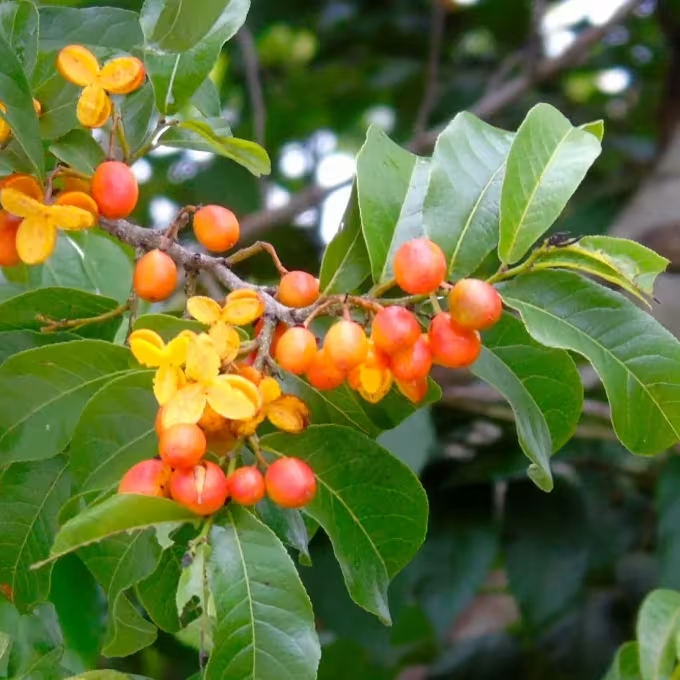
Description
Growing requirements
Shining Casearia (Casearia nitida) is a perennial evergreen shrub or small tree belonging to the Salicaceae family. It is native to tropical regions of the Americas, where it thrives in warm, humid forest environments.
This species requires a warm climate with temperatures consistently above 20 degrees Celsius. It is not frost-tolerant and should be protected from cold drafts or sudden drops in temperature during the winter months.
For optimal growth, the soil must be nutrient-rich, well-draining, and maintain a slightly acidic to neutral pH level. It performs best in organic-matter-rich substrates that retain moisture without becoming waterlogged.
Light requirements include bright, indirect sunlight. While the plant can tolerate partial shade, insufficient light often leads to leggy growth and a reduction in the glossiness of the foliage, which is its key ornamental feature.
Regular irrigation is essential, especially during the active growth period. The plant requires high atmospheric humidity to prevent leaf tip necrosis and maintain the health of the glossy, leather-like leaves.
Main diseases and pests
The most common pests affecting Casearia nitida are aphids and scale insects. These pests sap nutrients from the leaves, causing them to yellow and potentially drop prematurely.
Fungal pathogens such as root rot can develop if the soil remains constantly soggy. Proper soil aeration and professional drainage systems are crucial to preventing these persistent infections.
Spider mites are frequently encountered during dry spells. Increasing the humidity levels or misting the leaves can serve as an effective preventative measure against these infestations.
Disease management involves removing any infected twigs or leaves immediately to prevent the spread of spores throughout the plant population.
- Monitor leaf surfaces weekly for signs of discoloration.
- Use systemic insecticides only when infestation reaches critical thresholds.
- Ensure adequate spacing between plants to prevent overcrowding.