
Casearia aculeata
Casearia aculeata
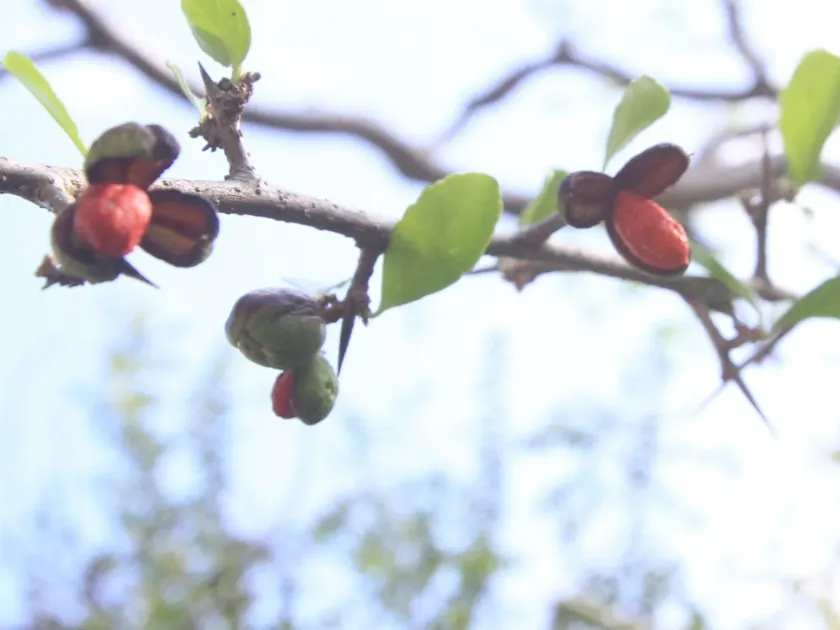
Description
Sowing dates
Propagation of Casearia aculeata is primarily achieved through seeds, which should be sown in well-draining, nutrient-rich soil mixtures.
Seeds often require pre-sowing treatment, such as light scarification or soaking in water, to overcome dormancy and ensure uniform germination.
In nursery settings, seeds are planted in trays under controlled temperatures, usually ranging from 25 to 28 degrees Celsius for optimal results.
Vegetative propagation via cuttings is a viable alternative for maintaining the specific characteristics of selected plant varieties.
Young seedlings should be hardened off in a nursery before being transplanted to their final location, ensuring they are protected from harsh weather.
Growing requirements
Casearia aculeata is a member of the Salicaceae family, recognized for its woody, shrub-like growth habit and characteristic spiny branches.
This species is native to tropical environments, requiring warm temperatures and high humidity levels for successful physiological development.
The plant thrives in fertile, loamy soils that provide excellent drainage, preventing the waterlogged conditions that can harm its root system.
While tolerant of partial shade, Casearia aculeata shows significantly better vigor and faster growth rates when exposed to consistent, bright sunlight.
Regular irrigation is essential during dry spells, as the plant is not drought-tolerant and requires moisture to maintain its lush foliage.
Yield
The economic value of this crop is primarily linked to its potential for medicinal extracts and its utility in traditional local horticulture.
While not a commercial staple food crop, the yield of biomass per hectare is managed through selective pruning to encourage denser branching.
Harvesting for medicinal purposes focuses on leaf and bark collection, which must be done sustainably to ensure the long-term health of the shrub.
Yield stability depends heavily on the consistency of the tropical climate, with irregular rainfall patterns potentially affecting growth cycles.
Farmers focused on this plant typically utilize agroforestry methods, integrating it with other species to maximize land efficiency and biodiversity.
Main diseases and pests
Fungal infections, such as leaf spot or powdery mildew, represent the most common biological threats, especially in humid and overcrowded conditions.
Insect pests including scale insects and mites are frequently observed, as they feed on the underside of the leaves and on young stems.
Integrated Pest Management (IPM) practices, including the introduction of natural predators, are recommended to control pest outbreaks effectively.
Over-fertilization can sometimes lead to succulent, weak growth that becomes more susceptible to aphid infestations and environmental stress.
Regular monitoring of the canopy health allows for early detection of pathogen symptoms, which is crucial for preventing significant economic losses.