
Casearia calodendron
Casearia calodendron
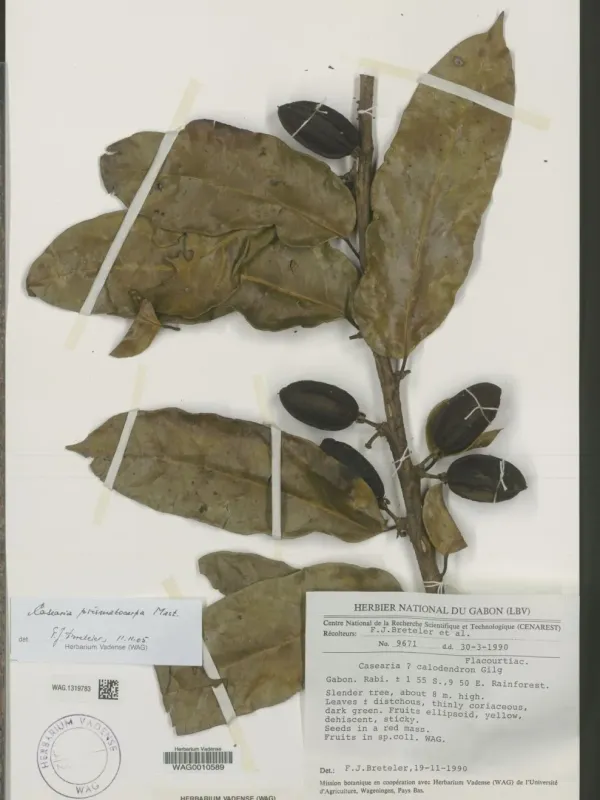
Description
Growing requirements
Casearia calodendron is a distinctive woody species belonging to the Salicaceae family. Originating from the diverse forests of Madagascar, this plant possesses unique morphological traits that define its adaptation to humid, tropical environments throughout the island.
The cultivation of Casearia calodendron requires strict adherence to climatic parameters. It thrives in environments where temperatures consistently range between 22 and 28 degrees Celsius, as it is highly sensitive to cold stress and frost, which can be fatal to the plant.
Soil requirements for this species include well-aerated and nutrient-rich growing media. The substrate should be slightly acidic to neutral, with excellent drainage properties to ensure the root system is protected from prolonged saturation, which induces decay.
Regarding light management, Casearia calodendron prefers bright, indirect illumination. In professional nursery settings, utilizing shading systems during the peak sunlight hours is recommended to protect the foliage from photo-inhibition and scorching effects.
Agronomic management involves regular monitoring of humidity levels, which should remain above 60 percent. Fertilization programs should prioritize balanced liquid feeds applied during the growth phases to encourage robust development of the canopy and maintenance of foliage health.
Main diseases and pests
Disease management is critical for this species, with fungal pathogens such as leaf spot being the most common issue. These pathogens are primarily opportunistic, thriving in stagnant air conditions and high-humidity environments without proper ventilation.
Common pest threats include spider mites and mealybugs, which are problematic in indoor and greenhouse setups. Integrated pest management (IPM) practices, including biological control agents, are highly recommended to maintain plant vitality and aesthetic value.