
Casearia battiscombei
Casearia battiscombei
Description
Growing requirements
Casearia battiscombei is an evergreen tree belonging to the Salicaceae family. It is native to the tropical and subtropical mountainous forests of Eastern Africa, thriving primarily in regions such as Kenya and Tanzania.
The tree prefers deep, fertile, and well-drained soils. In terms of climate, it demands a consistently warm environment with high humidity levels, which is typical for the moist montane zones where it naturally occurs.
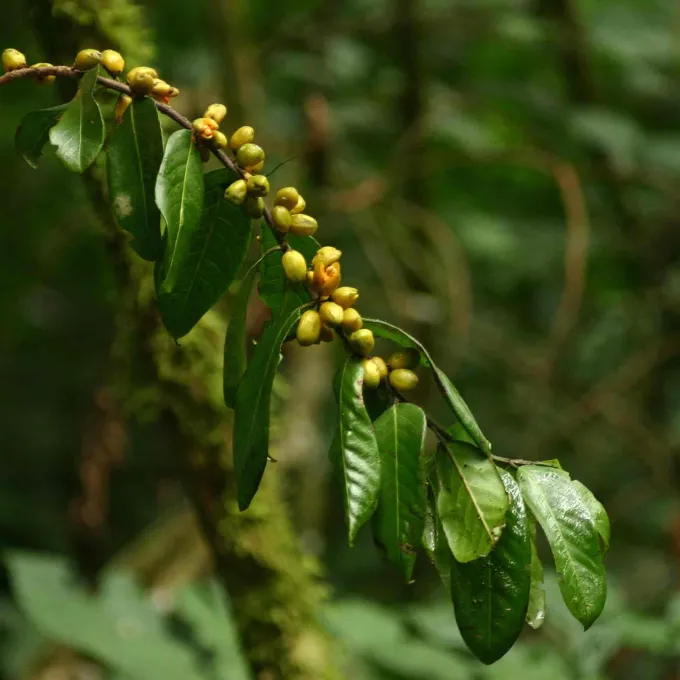
Botanically, the plant is characterized by a dense, leafy canopy with lanceolate or elliptical leaves. The flowers are small, often greenish-yellow, and are adapted for pollination in dense forest ecosystems.
Its primary economic value lies in its timber, which is known for its durability and structural strength. This makes it a preferred material for construction purposes, furniture making, and general woodworking in its native range.
Effective cultivation requires conditions that mimic its natural habitat. It is generally not cold-hardy and requires protection from frost and extreme climatic shifts to ensure healthy development and high-quality timber yield.
Main diseases and pests
The main threats to Casearia battiscombei include large-scale deforestation and habitat loss. Like many tropical forest species, it faces pressure from wood-boring insects and other pests that target weakened or mature tree individuals.
Fungal pathogens can affect the health of the tree, especially in stagnant air or waterlogged soil conditions. Proper site selection and maintaining biological diversity within the forest ecosystem are critical to mitigating these risks.
Sustainable forest management practices are essential to prevent over-exploitation and ensure the long-term survival of the population. Monitoring for early signs of disease and pest infestation is a standard procedure in managed forest areas.
Young plantations are particularly susceptible to environmental stresses. Providing adequate shade and wind protection during the initial growth phases significantly enhances survival rates and resistance against common pathogens.
The species demonstrates moderate resilience when managed correctly, yet it remains sensitive to systemic changes in local rainfall patterns and soil health, requiring consistent environmental care.