
Casearia kurzii
Casearia kurzii
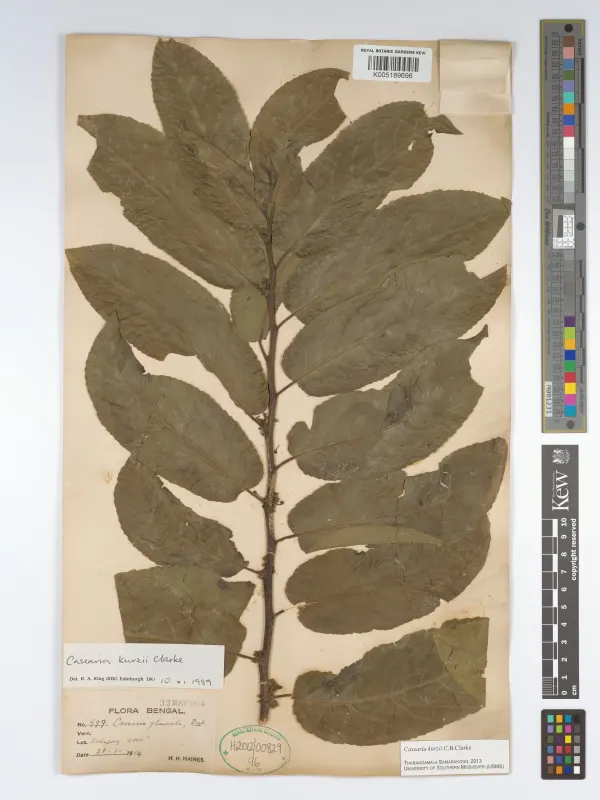
Description
Growing requirements
Casearia kurzii is a woody plant species that belongs to the Salicaceae family. It is natively found in the tropical regions of Southeast Asia, where it thrives in moist, multi-layered forest environments characterized by high annual precipitation.
The plant requires a consistently warm tropical climate to maintain its metabolic activities. It is highly sensitive to cold stress and frost, which limits its distribution primarily to equatorial and tropical zones where temperatures remain stable throughout the year.
Soil requirements for this species include high fertility, deep profiles, and excellent drainage. The plant is prone to root rot if subjected to waterlogging, necessitating a well-structured substrate that balances moisture retention with efficient aeration.
Botanically, Casearia kurzii is recognized by its evergreen foliage and specific floral structures typical of the genus. Its growth habit is relatively slow compared to fast-growing timber species, which allows it to allocate more resources to structural integrity and chemical defense mechanisms.
Regarding its utility, the species is primarily valued in local forestry management and ecological conservation efforts. Its role in maintaining biodiversity within its native range is significant, and researchers are increasingly interested in the phytochemical properties found within its various plant organs.