
Carpesium macrocephalum
Carpesium macrocephalum
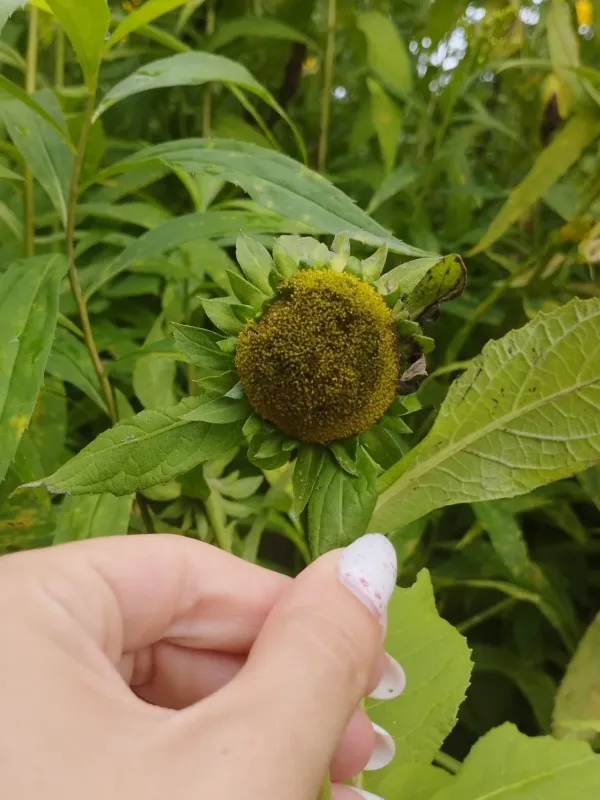
Description
Sowing dates
Sowing of Carpesium macrocephalum is recommended in early spring when the soil warms up to 10–12 degrees Celsius. The seeds have high germination rates but require stratification for about 30 days to enhance initial growth energy.
The optimal planting depth is 1–2 centimeters. When sowing in rows, a spacing of 45–60 centimeters should be maintained between the rows to ensure the full development of the plant's rosette leaves.
In temperate climates, sowing in open ground is possible after the risk of late frosts has passed. For earlier emergence, a greenhouse seedling method can be used, with transplanting to the field at the 3–4 true leaf stage.
Soil moisture is critical during the sowing period. The soil must be kept moderately moist until seedlings emerge, which can be achieved through regular watering or the use of agricultural fleece to maintain a stable microclimate.
Once seedlings have emerged, thinning should be performed, leaving 25–30 centimeters between individual plants. This prevents overcrowding, which can lead to stunted growth and reduced quality of the harvested medicinal material.
Growing requirements
Carpesium macrocephalum is an herbaceous perennial belonging to the Asteraceae family, native to the forest edges and mountain slopes of East Asia. The plant prefers moderately fertile, well-drained loamy soils with a neutral or slightly acidic pH level.
The crop has moderate light requirements. While it tolerates partial shade well, plants grown in full sunlight often exhibit higher concentrations of biologically active compounds in their aerial parts.
Water requirements are moderate. Carpesium is sensitive to waterlogging, so it is important to avoid low-lying areas with high groundwater levels. During prolonged drought, supplemental irrigation is necessary to support vegetative growth.
The plant responds well to organic fertilization applied during autumn tillage. In the spring, mineral fertilizers with a high nitrogen content are recommended to stimulate the growth of green mass.
The ideal temperature range for successful cultivation is between 15 and 25 degrees Celsius. The plant has sufficient cold resistance to withstand mild winters under snow cover, though mulching may be required in regions with snowless winters.
Yield
Economic use of Carpesium macrocephalum is primarily focused on the production of medicinal raw materials. The flowers and leaves are valued for their content of sesquiterpene lactones, which exhibit significant anthelmintic and anti-inflammatory properties.
Yield of green mass depends heavily on agricultural practices and plant density. On average, with intensive care, it is possible to obtain 15–20 centners of dry biomass per hectare of land.
The quality of the harvest is determined by the timing of collection. For maximum concentration of active ingredients, flower heads should be harvested during full bloom, when the concentration of essential oils peaks.
After collection, the raw material must be dried rapidly at a temperature of 40–45 degrees Celsius. This prevents enzymatic processes and the degradation of active components, ensuring the high quality and biological activity of the product.
Economic profitability increases when processing occurs on-site. Minimizing transportation time reduces the loss of volatile compounds and significantly increases the value of the final pharmaceutical product.
Main diseases and pests
The main threats to Carpesium plantings are fungal diseases that develop under high humidity. The most common issues include powdery mildew and various types of leaf spots, which significantly degrade the quality of the foliage.
Preventive spraying with bio-fungicides is used for disease management. The use of chemical pesticides is strictly limited since the plant is grown for medicinal purposes, requiring high ecological standards and safety.
Among pests, aphids and spider mites cause the most damage. These insects feed on young shoots and buds, draining sap and hindering the overall development of the plant, especially during early vegetation stages.
Pest control is based on integrated pest management principles. Essential steps include crop rotation and the timely removal of weeds, which often serve as reservoirs for insect populations.
To prevent the spread of diseases, it is necessary to ensure good air circulation within the planting site by following proper spacing guidelines. Regular inspection of the crop allows for early detection of affected areas.
Harvesting
Harvesting of Carpesium is conducted in two stages if both flowers and leaves are required. Flower heads are collected by hand or specialized machinery during full bloom, ensuring the flower heads are not crushed.
The aerial parts of the plant are harvested for foliage material at the beginning of the fruiting phase. At this stage, the concentration of active substances in the stems is optimal for extraction purposes.
After harvesting, the material should be sent to drying facilities immediately. It is unacceptable to leave the harvested mass in the field for more than a few hours to avoid overheating and oxidation of the plant material.
Drying is carried out in convection chambers with forced ventilation. Maintaining a stable temperature is crucial to prevent the loss of essential volatile components that determine the pharmacological efficacy of the plant.
Storage of the finished dry material should be done in airtight packaging in cool, dark, and well-ventilated warehouses. Properly dried Carpesium maintains its quality for up to two years without significant loss of active compounds.