
Carpesium abrotanoides
Carpesium abrotanoides
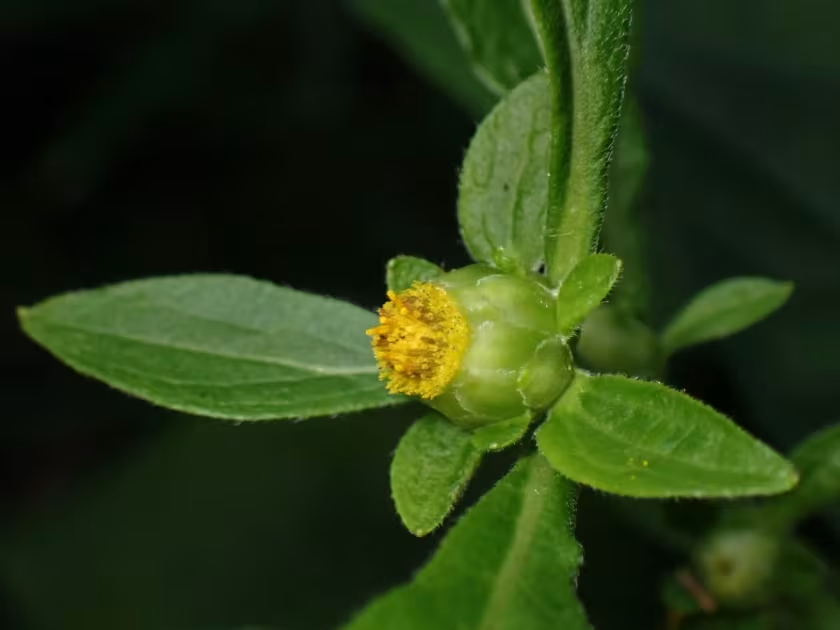
Description
Sowing dates
Sowing is typically performed in early spring once soil temperatures reach 10-12 degrees Celsius. Ensuring the seedbed is finely prepared allows for better contact between the soil and the seeds, which is essential for uniform germination.
Seeds should be sown at a shallow depth of approximately 1-2 centimeters. Row spacing is usually kept between 45 and 60 centimeters to provide enough space for mechanical weeding and adequate airflow between mature plants.
Maintaining consistent soil moisture after sowing is vital for successful germination. If the surface dries out too quickly, germination rates will significantly decrease, leading to uneven crop density across the field.
Thinning the rows is a necessary step once the seedlings reach the 3-4 leaf stage. This ensures that each plant has enough nutrients and sunlight to develop properly without being hindered by neighboring plants.
For large-scale cultivation, using professional-grade seeds with high germination viability is recommended. Pre-treatment or priming of seeds can further improve emergence uniformity in field conditions.
Growing requirements
Carpesium abrotanoides is a perennial herbaceous plant belonging to the Asteraceae family. Its native distribution spans across Eastern Asia, particularly in China and Japan, where it has been traditionally used in herbal medicine for centuries.
The plant thrives in fertile, well-drained loam soils. It prefers areas with moderate humidity and good sunlight, though it can tolerate partial shade, especially during the seedling stage. Adequate soil aeration is crucial for the healthy development of its root system.
In terms of climatic requirements, Carpesium abrotanoides performs best in temperate to subtropical zones. It is relatively adaptable but requires protection from waterlogging, which can easily lead to root rot or fungal infections during periods of excessive rainfall.
Proper agronomic management includes regular weeding to reduce competition and the application of balanced organic fertilizers. Soil testing is recommended to ensure the pH remains within the range suitable for the plant's nutrient uptake, usually between 6.0 and 7.0.
Overall, the plant is hardy and requires consistent care rather than intensive intervention. Irrigation should be managed to keep the soil moisture stable without causing saturation, particularly during the peak growth season.
Main diseases and pests
Carpesium abrotanoides is susceptible to several common pests including aphids and spider mites, which can damage leaves and reduce the plant's vitality. Regular field monitoring is necessary to implement integrated pest management if the infestation reaches economic thresholds.
Fungal diseases, particularly powdery mildew and root rot, represent the most significant threats to yield. These are often triggered by improper irrigation practices, poor drainage, or excessive humidity during the summer months.
Crop rotation is an effective preventive strategy to minimize soil-borne pathogens. Planting after non-host crops helps to interrupt the life cycle of specialized pests and soil diseases that target the Asteraceae family.
Weed control is essential not just for nutrient competition, but because some weeds act as alternative hosts for viruses and insects that can impact the health of the Carpesium crop.
In cases of severe outbreaks, the application of biological pesticides or targeted fungicides approved for medicinal plant production may be necessary, provided that the waiting periods for harvest are strictly observed to ensure product safety.
Harvesting
The harvest strategy depends on the intended use of the plant material. Aerial parts are collected during the flowering phase when the content of sesquiterpene lactones is at its peak, while roots are harvested at the end of the vegetative cycle.
When harvesting the aerial parts, the stems should be cut about 10-15 centimeters above the ground level. Prompt drying is essential to prevent the loss of active compounds; the temperature should not exceed 45 degrees Celsius during the drying process.
Root harvesting involves careful extraction from the soil to avoid damage. After cleaning and washing, the roots are typically sliced and dried in ventilated drying rooms to maintain their medicinal quality and prevent spoilage.
Yield efficiency is highly dependent on the quality of soil preparation and the timing of the harvest. Farmers should monitor the plant's physiological stages closely to ensure that the harvest occurs at the ideal point of active ingredient concentration.
Finally, the processed product must be stored in cool, dry, and dark conditions to ensure longevity. Proper packaging materials that allow for airflow while protecting the product from moisture are critical for market-grade output.