
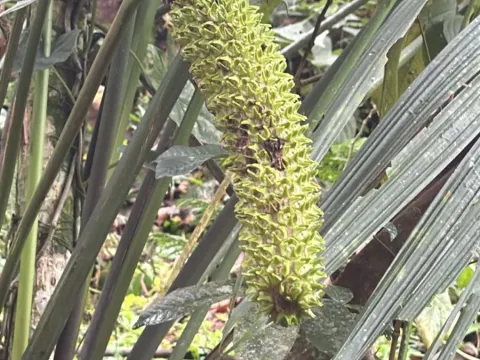
Carludovica
Carludovica
Carludovica, known for its industrial fiber applications, is primarily propagated through vegetative means using root suckers. Planting is typically scheduled at the beginning of the rainy season to ensure that young plants establish deep roots before the drier, more challenging months arrive.
What the section contains

Carludovica
While seed propagation is possible, it is rarely practiced in commercial agriculture due to the extremely low germination rates and the lengthy time required for seedlings to reach a harvestable size. Vegetative propagation allows for consistency in plant quality across the plantation.
The standard spacing for Carludovica is approximately 1.5 to 2 meters between plants. This distance provides adequate room for the large, fan-like leaves to develop without competing for sunlight, which is critical for producing long, intact fibers suitable for weaving.
Before planting, the soil must be deeply plowed and enriched with high-quality organic compost. Carludovica thrives in loose, well-aerated soil that allows for rapid root expansion, and farmers often add mulch to preserve soil humidity and structure.
New plantations require significant care during the first year, including frequent irrigation and light shading to protect young foliage from intense heat. Once the plants are established, they demonstrate higher resilience and productivity.
As a member of the Cyclanthaceae family, Carludovica is a tropical perennial that demands high humidity and stable temperatures ranging between 22 and 28 degrees Celsius. Any significant drop in temperature can severely restrict the growth rate of the plant.
The ideal soil for this crop is a nutrient-rich, well-draining loam or sandy soil. It is vital to avoid waterlogged conditions, as the fleshy root system is highly susceptible to rot, which can cause total yield loss across an entire field.
The plant requires a sheltered location protected from strong winds, which can damage the large, delicate leaf blades. In its native habitat, it grows in the understory of rainforests, and this preference for filtered light should be simulated in agricultural environments.
Fertilization schedules focus on nitrogen-rich organic inputs to boost foliage production. Balanced mineral supplements are applied twice a year to ensure the leaves remain flexible and strong, which is the primary trait sought for industrial use.
Effective water management is the cornerstone of Carludovica cultivation. Given its tropical nature, the crop requires consistent moisture throughout the year, making irrigation systems essential in regions with distinct dry seasons.
The economic yield of Carludovica is defined by the harvest of young, tightly folded leaves. These leaves contain the soft, pliable fibers needed for high-quality items, most notably for the production of the famous Panama hats.
Yields are maximized by implementing a continuous harvest schedule, where leaves are collected as they reach the ideal stage of development. This approach ensures a steady supply of fresh raw material for processing plants throughout the year.
Productivity per hectare is influenced by the density of the plantation and the health of the soil. As the plants mature, they can provide multiple harvests annually, making the crop a sustainable and long-term investment for farmers in tropical climates.
Post-harvest processing is just as critical as cultivation. The leaves must be stripped into thin ribbons and processed within hours to prevent darkening and maintain the natural luster and flexibility of the plant fibers.
Optimal yields are typically achieved when plantations are in their third to fifth year of production. By carefully managing the growth cycles, growers can maintain peak productivity for many years before needing to renovate the field.
Fungal diseases related to high humidity and poor air circulation are the primary threats to Carludovica crops. Root rot, caused by excessive soil moisture, is the most common and devastating disease for this plant.
Pests such as mealybugs and scale insects frequently infest the leaves, extracting essential sap and weakening the overall plant structure. Early detection and targeted applications of systemic insecticides are often necessary to control these populations.
Nematodes are another significant threat, specifically targeting the root system and inhibiting the plant's nutrient uptake. Preventive measures, including soil disinfection and using certified pathogen-free planting stock, are standard protocols.
Maintaining a clean field environment by removing weeds and promptly disposing of infected plant material helps prevent the spread of diseases. Proper spacing is also essential to ensure adequate airflow, which naturally reduces fungal risks.
The use of biological controls, such as beneficial predators, is becoming an increasingly popular strategy for sustainable plantations, helping to manage pest levels without the excessive use of synthetic chemical pesticides.
Harvesting Carludovica is a labor-intensive, manual process that requires skilled workers to identify the correct stage of leaf maturity. Only the tightly closed leaves are selected, as these contain the high-quality fibers required by the industry.
Workers use sharp knives to carefully cut the petioles at the base of the plant. Precision is paramount; any accidental damage to the terminal bud of the plant can stunt future growth and decrease the longevity of the individual plant.
The harvested leaves are rapidly sorted based on their size and quality. Rapid transportation to the processing facility is mandatory, as heat exposure can quickly degrade the raw material, affecting the quality of the final textile product.
Once processed, the fibers are dried, sometimes using specific sun-drying techniques to reach the desired whiteness and texture. Every step of the harvest and post-harvest phase is designed to preserve the physical properties of the fibers.
Sustainable harvest practices allow a single plant to produce leaves for several decades. By treating the plants with care, agriculturalists ensure a long-term supply chain that supports both local artisans and industrial manufacturers.