
Panama hat plant
Carludovica palmata Ruiz & Pav.
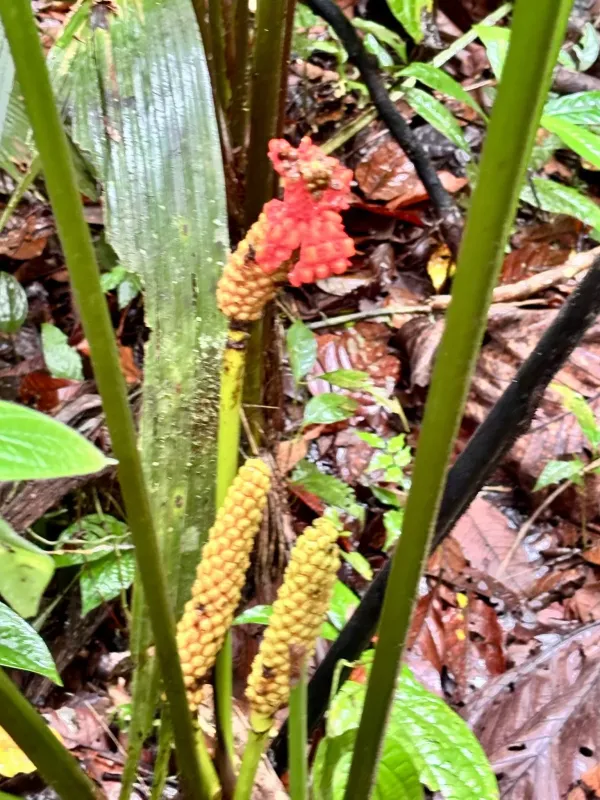
Description
Sowing dates
Carludovica palmata is propagated primarily through the division of rhizomes, which ensures the consistency of the plant's structural characteristics. Planting is typically scheduled at the beginning of the rainy season to provide the young plants with sufficient moisture to establish their root systems.
Seed propagation is possible but less common, as the seeds have a very short lifespan and require high humidity and warmth to germinate successfully. It is crucial to use fresh seeds immediately after harvesting to ensure a high germination rate.
On commercial plantations, spacing is carefully calculated to allow for the massive fan-like leaves to develop without competition for sunlight or nutrients. Providing enough space also facilitates easier access for the workers during the frequent harvesting cycles.
Selecting the right site is fundamental; the soil must be rich in organic matter and possess excellent drainage to prevent root rot. The plant thrives in the understory of tropical environments, so creating a protected environment is often necessary.
After transplanting, the focus remains on keeping the area free of invasive weeds that could hinder the growth of the new plants during their first year of development.
Growing requirements
Belonging to the Cyclanthaceae family, this species is not a true palm despite its common name and appearance. It prefers a humid tropical climate where temperatures remain between 20°C and 30°C throughout the year without significant fluctuations.
The plant requires deep, fertile, and well-drained soils to support its vigorous vegetative growth. While it is quite hardy in its native habitat, it shows significant sensitivity to cold winds and freezing temperatures, limiting its cultivation to specific tropical regions.
Moisture management is key; the plant demands high levels of soil and atmospheric humidity. During extended dry spells, irrigation is vital to prevent the leaves from losing their flexibility, which is essential for high-quality fiber extraction.
Although it requires plenty of indirect light, direct exposure to harsh tropical sunlight should be avoided to prevent leaf scorch. Many producers plant these under existing forest canopy or use artificial shading to optimize growth.
Regular applications of organic fertilizer are recommended to promote the continuous production of young leaves, which serve as the raw material for the fiber industry.
Yield
The yield of Carludovica palmata is measured by the quantity of unopened leaves suitable for processing. Harvesting usually begins when the plant reaches maturity, typically around the third year after the initial plantation setup.
With correct agrotechnical management, a single plant can produce leaves for harvest multiple times a year for over a decade. The longevity of the plant makes it an economically viable crop for smallholder farmers.
Quality is often more important than volume, as the fineness of the fiber determines its market value. Proper care, including balanced irrigation and protection from pests, directly results in a higher percentage of premium-grade material.
Harvesting strategies are adjusted based on the specific market needs, such as the demand for exceptionally fine fibers used in luxury hat-making or more robust fibers for traditional items.
Continuous monitoring of plant health is essential to ensure that the production cycle remains sustainable and that the yield does not decline prematurely due to poor soil fertility.
Main diseases and pests
Fungal infections represent the most significant threat to Carludovica palmata, particularly in regions with high humidity and poor air circulation. These infections can discolor the leaves and ruin the quality of the internal fibers.
Pests such as spider mites and thrips frequently target the tender young leaves. They cause structural damage and blemishes that significantly degrade the final product quality during the drying process.
Root rot, often caused by stagnant water in poorly drained soils, can lead to the rapid death of the plant. Maintaining optimal moisture levels without causing waterlogging is a delicate balance in the field.
Integrated pest management, including the use of biological control agents, is highly recommended to protect the plantations while maintaining organic standards for the harvested materials.
Regular inspection of the foliage allows for the early detection of localized outbreaks, which can be managed quickly before they spread across the entire plantation.
Harvesting
The harvest is a labor-intensive manual process where only unopened leaves are selected. These leaves are cut while they are still in a tight bundle, as they are most pliable at this specific stage of development.
Once harvested, the processing begins with the stripping of the leaves into thin strips. These strips are then boiled to soften the texture and subsequently dried in the sun until they turn a pale, white color.
Drying must be conducted in dry conditions to prevent mold growth, which would compromise the integrity of the fiber. Improper drying can lead to brittle fibers that are difficult to weave.
The fibers are sorted into different grades based on their length, width, and color uniformity. This classification process is critical for ensuring that the final products meet the required quality standards.
Storage of the finished fiber requires a clean, moisture-free environment to maintain its flexibility and strength until it is finally woven into traditional Panama hats or other artisanal products.