
Cambuca
Campomanesia phaea
Description
Sowing dates
Propagation of Campomanesia phaea, commonly known as Cambuca, is primarily achieved through seeds. The seeds have low viability once dried, so it is essential to sow them immediately after removing them from the ripe fruit.
Successful germination requires a light, well-draining substrate rich in organic matter. Sowing is done in containers, maintaining a stable temperature between 22 and 28 degrees Celsius.
Seedlings emerge unevenly, a process that can take from 3 to 6 weeks depending on seed freshness. It is crucial to maintain consistent soil moisture without waterlogging, which can cause young roots to rot.
Seedlings are pricked out into individual containers after the formation of two to three pairs of true leaves. The plant exhibits slow growth rates in the early stages, requiring patience during the care process.
Vegetative propagation via cuttings is also possible, but this method requires root stimulants and the creation of greenhouse conditions with high air humidity for success.
Growing requirements
Campomanesia phaea belongs to the Myrtaceae family and is native to the Atlantic forests of Brazil. This evergreen tree prefers a humid tropical climate and is intolerant of temperature fluctuations or drought.
The culture requires fertile, slightly acidic soils with good aeration. An optimal pH range of 5.5 to 6.5 ensures better absorption of essential micronutrients from the soil.
The tree requires bright, indirect light; however, young saplings may suffer from direct sunlight in the first years of life. Partial shading during noon hours is recommended to prevent leaf scorching.
Cultivation includes regular but moderate watering. In container gardening, providing a high-quality drainage layer is vital to prevent waterlogging, to which the plant is highly sensitive.
To support active growth and fruiting, regular fertilization with organic fertilizers or specialized mineral complexes high in potassium and phosphorus is necessary during the growing season.
Yield
Fruiting in Campomanesia phaea starts relatively late, on average 5 to 8 years after planting from seed. Yield depends heavily on lighting conditions and the overall health of the tree.
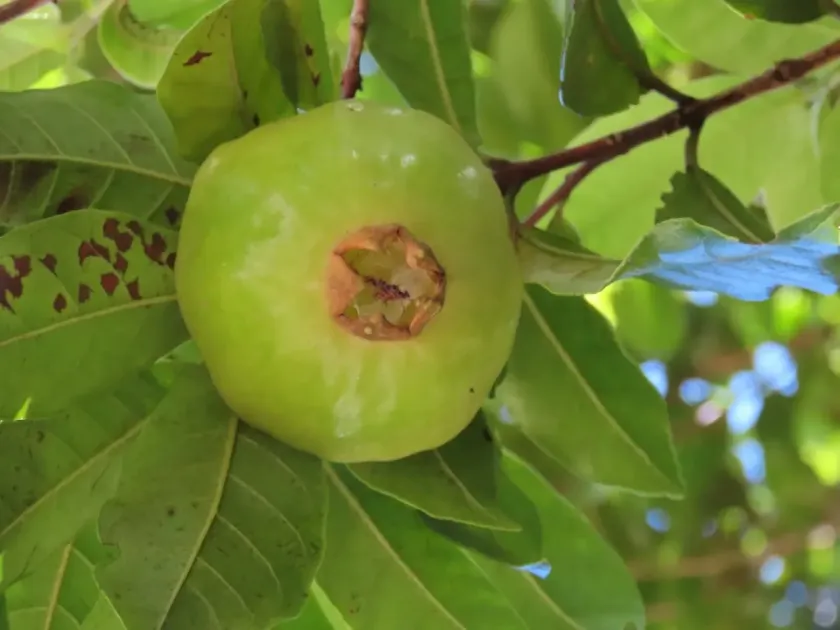
The fruits are round, greenish-yellow berries with a unique aroma and a sweet-and-sour taste. Ripe fruits are very delicate and do not withstand long-distance transport well.
The main commercial use is processing: the fruits are used to make juices, jams, jellies, and desserts. Due to their high pectin content, they are excellent for preserving.
Harvesting is done selectively as fruits reach full biological maturity. The optimal time for picking is determined by the change in skin color and the characteristic intense aroma.
Commercial cultivation is rare; the plant is more commonly found in agroforestry systems or private gardens, where it is valued for its exotic nature and high nutritional content.
Main diseases and pests
The main threats to the health of Campomanesia phaea are fungal diseases that develop due to excessive air humidity and poor air circulation within the canopy.
Common pests for members of the Myrtaceae family include mealybugs and scale insects, which attack leaves and young shoots, weakening the plant.
In greenhouse conditions, spider mites can pose a serious threat. Controlling them requires regular inspections and the application of biological insecticides upon detecting the first signs of infestation.
Root rot is the most dangerous pathology, developing as a result of waterlogged substrate or the use of contaminated soil during planting.
- Ensuring canopy aeration.
- Monitoring soil moisture levels.
- Regular sanitary pruning of damaged branches.
Harvesting
Harvesting Cambuca fruits requires gentle handling, as the skin is very thin and damages easily. It is recommended to hand-pick the fruits during the morning hours.
Ripe fruits tend to drop quickly, so the ground under the tree can be covered with non-woven fabric to collect fallen berries and prevent damage upon contact with the soil.
Immediately after harvest, the fruits must be stored in a cool place. Given their short shelf life, immediate consumption or processing within 24–48 hours is advised.
Maturity is determined by the softness of the fruit when pressed lightly and a distinct sweet scent, reminiscent of a mixture of strawberry and tropical fruits.
For long-term storage, the fruits can be frozen—optionally after removing the skin if required by a recipe—which helps preserve their nutritional properties and aroma for several months.