
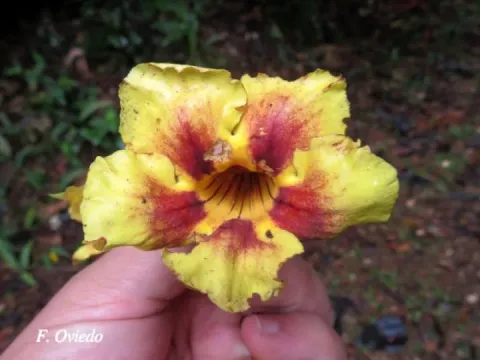
Callichlamys
Callichlamys
Callichlamys is a genus of woody vines belonging to the Bignoniaceae family. Native to the tropical forests of Central and South America, these plants are highly valued for their climbing habit and showy floral displays, which play a crucial role in their native ecosystems by attracting specialized pollinators.
What the section contains

Callichlamys
Botanically, Callichlamys is characterized by its trifoliate leaves and large, funnel-shaped yellow flowers. The plant exhibits a vigorous growth pattern, requiring robust support systems such as trellises or sturdy trees to reach the sunlight in its natural forest habitat.
To thrive in a controlled environment, Callichlamys demands specific climatic conditions: high ambient temperatures and consistent humidity levels are essential. It is not frost-tolerant and requires protection from temperatures dropping below tropical minimums, which can cause significant tissue damage.
The soil requirements for this crop include a well-drained, nutrient-rich substrate, preferably enriched with organic matter. Proper irrigation is a critical part of the agricultural process; the soil must remain consistently moist but never waterlogged to prevent root system suffocation.
In terms of хозяйственного use, Callichlamys is primarily cultivated as an ornamental plant in botanical gardens and conservatories. Its rapid growth rate and ability to create dense green curtains adorned with vibrant flowers make it a highly desirable species for tropical landscaping and architectural greenery projects.
Like many tropical species, Callichlamys is susceptible to common greenhouse pests, particularly spider mites, aphids, and mealybugs. These pests can rapidly colonize the leaves and stems, necessitating integrated pest management approaches to maintain the plant's aesthetic and physiological health.
Fungal diseases, including leaf spot and root rot, are frequent threats when environmental conditions deviate from the ideal, particularly during periods of high humidity combined with stagnant airflow. Ensuring proper ventilation and avoiding overhead irrigation can significantly reduce the risk of infection.