
Bignonia magnifica
Bignonia magnifica
Description
Growing requirements
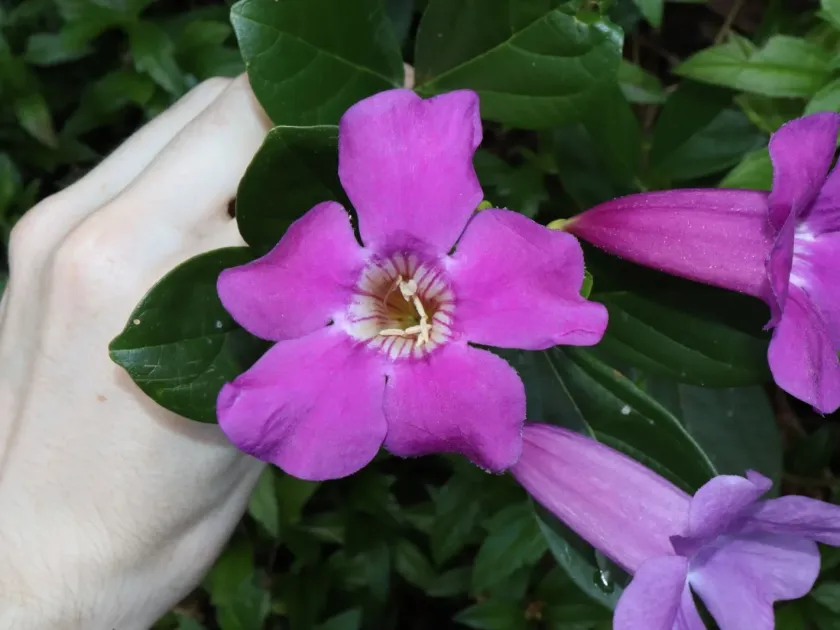
Bignonia magnifica, often classified under the botanical name Saritaea magnifica, is a vigorous evergreen vine belonging to the Bignoniaceae family. It is native to the tropical forests of Colombia and Panama.
This species requires a frost-free climate to thrive. It is typically grown in greenhouses or botanical gardens in temperate regions, as it cannot survive exposure to temperatures below 15°C for extended periods.
The plant demands full sunlight to partial shade exposure. High light intensity is crucial for the development of its characteristic purple, trumpet-shaped flowers during the blooming season.
Optimal soil conditions include well-draining, nutrient-rich loamy soil. Maintaining a neutral to slightly acidic pH level helps ensure the plant can efficiently uptake necessary macro and micronutrients.
Regular maintenance involves providing sturdy trellises or supports for its climbing stems. During the growing season, consistent moisture is required, but soil must be allowed to dry slightly between watering sessions.
Main diseases and pests
Common pests affecting Bignonia magnifica include spider mites and scale insects, particularly when the vine is grown in dry indoor conditions with poor air circulation.
Fungal issues such as powdery mildew may arise if the plant is kept in excessively humid and poorly ventilated environments, often leading to leaf drop.
Root rot is a major threat caused by over-irrigation or heavy, non-draining soil, which quickly weakens the vascular system of the climbing plant.
Monitoring for signs of sap-sucking insects is essential, as early detection prevents large-scale infestations that can stunt the plant's growth and flowering capacity.
Using sterile soil mixtures and maintaining proper distance between plants in a greenhouse can significantly reduce the risk of spreading soil-borne diseases.