
Blue Jacaranda
Jacaranda jasminoides
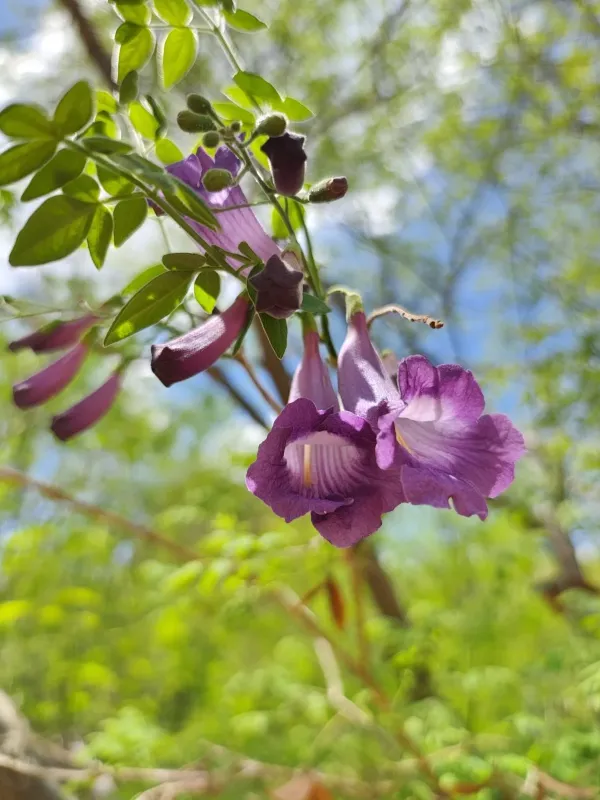
Description
Growing requirements
Jacaranda mimosifolia is a remarkable ornamental tree belonging to the Bignoniaceae family, highly regarded for its stunning panicles of lavender-blue, trumpet-shaped flowers.
Originally native to South America, particularly Argentina and Bolivia, it has become a staple in subtropical and tropical urban landscaping worldwide.
The tree thrives in fertile, well-draining soils with a slightly acidic to neutral pH, ensuring that root respiration remains optimal during the growing season.
In terms of climate, it requires full sun exposure and a frost-free environment to thrive, although established trees can endure light frost for short periods.
Maintenance involves periodic pruning to shape the canopy and remove dead wood, which helps maintain plant vigor and enhances the overall flowering display each year.
Main diseases and pests
The species is susceptible to various pests, with aphids being the most common, as they congregate on tender new growth and secrete sticky honeydew.
Scale insects can attach themselves to branches and stems, causing localized dieback and creating entry points for secondary bacterial or fungal infections.
Root rot, specifically caused by Phytophthora species, often occurs when the soil remains waterlogged or the drainage is inadequate for the root system.
Leaf spot diseases, characterized by chlorotic or necrotic patches, may develop under high humidity conditions when foliage is not allowed to dry out sufficiently.
Integrated pest management strategies are crucial, involving biological controls such as predatory mites and the judicious use of horticultural oils to suppress insect populations.