
Bridelia montana
Bridelia montana
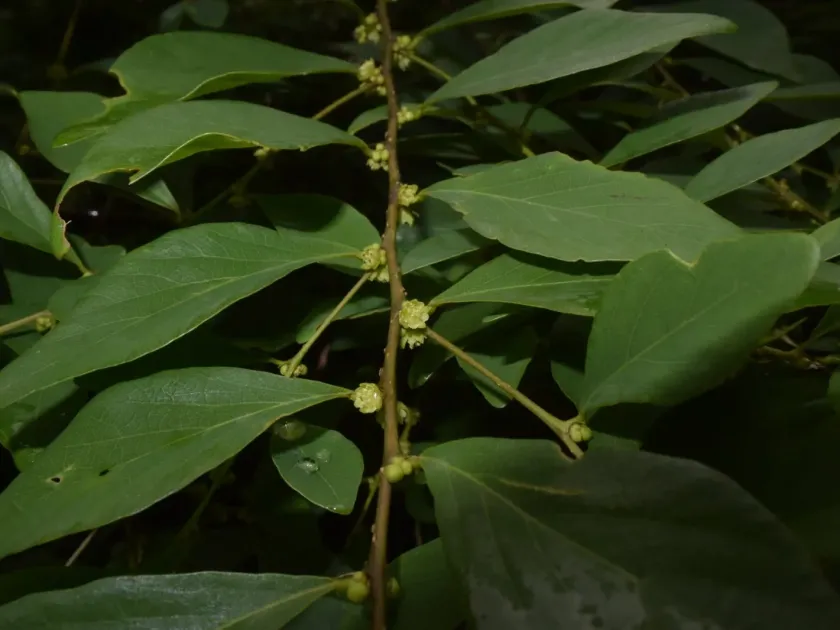
Description
Sowing dates
The propagation of Bridelia montana is primarily achieved through seeds, which should be collected from healthy and mature mother trees to ensure genetic vigor.
Seed treatment, such as soaking in water for 24 hours, is highly recommended before sowing to soften the seed coat and significantly increase germination rates.
Seeds are sown in nursery beds or individual containers filled with a well-draining soil mix, typically composed of peat, sand, and organic compost for early nutrition.
Regular monitoring of moisture levels is crucial during the germination period; the substrate must remain consistently moist but never waterlogged to prevent damping-off diseases.
Once seedlings reach a height of approximately 30 to 40 centimeters, they are ready for hardening-off and subsequent transplanting into their permanent field locations.
Growing requirements
Bridelia montana belongs to the Phyllanthaceae family and is recognized as a hardy, evergreen tree species naturally occurring in mountainous and tropical regions.
The tree thrives in varied soil types, showing a strong preference for well-drained loamy soils but demonstrating the ability to establish itself on rocky or sloped terrains.
Full solar exposure is optimal for rapid growth, although young Bridelia plants benefit from partial shade during their first season to prevent extreme water loss.
Climatic requirements involve a warm, frost-free environment; while the tree is somewhat drought-resistant, consistent rainfall promotes a more lush foliage and fruit production.
Agricultural management requires spacing trees at intervals of 5 to 7 meters to allow for canopy development and to ensure adequate airflow, which reduces humidity-related diseases.
Yield
The fruits of Bridelia montana are small, edible berries that are frequently harvested by local communities as a seasonal food supplement rich in natural nutrients.
The timber harvested from this species is highly regarded for its density and natural resistance to decay, making it an excellent material for rural construction and tool handles.
Extracts derived from the bark and leaves are frequently utilized in traditional medicine, and current research continues to explore their potential for modern pharmaceutical applications.
The plant serves as a vital forage source, with leaves being palatable and nutritious for various livestock, supporting integration into sustainable agroforestry systems.
Tannins found in the bark allow for the utilization of by-products in the leather tanning industry, adding an extra layer of economic value to tree plantations.
Main diseases and pests
Root rot pathogens represent a significant threat to Bridelia montana, especially in areas where soil drainage is inadequate or water pooling is common during the monsoon season.
Defoliating insects, including larvae of various moth species, can cause severe stress to young plantations by consuming large portions of the photosynthetic canopy.
Boring beetles pose a serious risk to the structural integrity of mature trees, as they excavate tunnels within the trunk, potentially leading to timber degradation and windthrow.
Fungal leaf spot diseases can emerge under high-humidity conditions, necessitating proactive management through pruning and the removal of infected foliage to prevent spread.
Implementing integrated pest management practices, such as maintaining healthy soil conditions and encouraging beneficial insect populations, is essential for long-term tree health.
Harvesting
Fruit harvesting is performed manually by carefully collecting ripened berries, ensuring the process does not damage the delicate branches of the tree.
Bark harvesting is conducted sparingly using sustainable techniques, often involving vertical strips, to ensure the cambium layer remains intact for future tree recovery.
Leaf harvesting for fodder or medical use is typically timed with the peak growing season to maximize the concentration of beneficial biochemical compounds.
Timber harvesting is a long-term process, requiring trees to reach maturity to ensure the wood has attained the desired hardness and technical characteristics required for industrial use.
Post-harvest handling of fruits requires prompt transport to processing facilities, as they are susceptible to rapid deterioration in warm tropical climates without proper storage.