
Bridelia atroviridis
Bridelia atroviridis
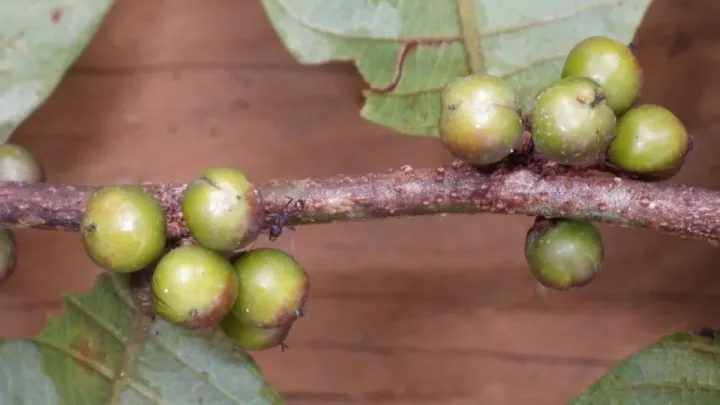
Description
Growing requirements
Bridelia atroviridis is a perennial woody plant belonging to the family Phyllanthaceae. Native to tropical Africa, it is commonly found in gallery forests, riverine habitats, and forest fringes, where it plays a significant role in the local ecosystem.
The species requires a humid tropical climate to thrive. It performs best in fertile, well-drained soils, although it shows a degree of plasticity in adapting to various soil compositions if moisture levels are consistently maintained throughout the year.
Botanically, it is characterized by its evergreen foliage and deep green leaves, which give it the specific epithet. The tree architecture is generally robust, making it suitable for agroforestry projects aimed at canopy development and soil conservation.
Standard cultivation practices involve careful site selection to avoid waterlogged conditions while ensuring adequate irrigation during the initial establishment phase. Weed management is crucial in the first few years to prevent competition for nutrients.
Economic applications are diverse, ranging from the use of its durable wood in construction and local crafts to its importance in ethnobotany. The bark and leaves are frequently utilized in traditional medicinal practices due to their bioactive properties.
Main diseases and pests
Potential threats to this species include leaf-eating insects that can cause defoliation in younger trees and various fungal pathogens that flourish in high-humidity environments, necessitating periodic health inspections.