
Boswellia socotrana
Boswellia socotrana
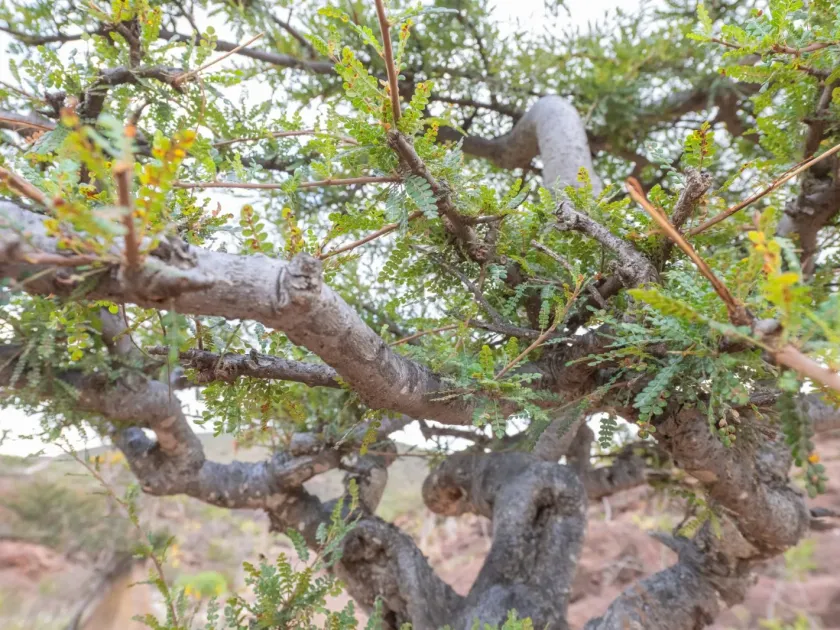
Description
Growing requirements
Boswellia socotrana is a unique tree species within the Burseraceae family, endemic to the island of Socotra. This botanical marvel is perfectly adapted to the harsh, arid landscapes of its native habitat.
The plant thrives in extreme tropical conditions characterized by intense heat and long periods of water scarcity. It possesses a succulent-like trunk that serves as a vital water storage organ during drought.
Agronomic success requires well-drained, limestone-rich, or rocky soils. Waterlogging is detrimental to the plant, as it quickly leads to root rot, necessitating highly permeable growing sites.
Botanically, it features a distinct bulbous trunk protected by papery, peeling bark, and compound leaves clustered at the tips of the branches, optimized for gas exchange in arid environments.
Cultivation is challenging due to the slow growth rate of the tree. Propagation is primarily through seeds, requiring careful attention to light exposure and minimal irrigation during the early development stages.
Main diseases and pests
Overgrazing by livestock is the most significant threat to the regeneration of Boswellia socotrana populations, as young seedlings are often consumed by wandering goats.
The species is also susceptible to wood-boring insects, which exploit the open wounds left by improper tapping techniques, potentially leading to branch decay.
Fungal infections are a constant risk when the integrity of the protective bark is compromised in humid or poorly managed conditions, spreading quickly through the stem tissues.
Environmental stress, driven by erratic rainfall patterns, can reduce the tree's natural resilience, making it more vulnerable to secondary pests and various pathogens.
Effective management involves protection of saplings, sustainable tapping cycles, and periodic monitoring for signs of infestation to preserve the long-term viability of the grove.
Harvesting
The primary agricultural interest in Boswellia socotrana lies in the production of high-quality incense resin, harvested from the bark of the tree using traditional tapping methods.
Tapping involves creating precise, shallow incisions on the tree trunk. This stimulates the plant to exude a resinous sap as a defensive response to the mechanical injury.
The resin slowly solidifies upon exposure to air and heat, turning into amber-colored droplets which are then carefully collected and processed for international trade.
Professional harvesting requires expert knowledge to ensure that the depth of the incision does not penetrate beyond the outer layers, thus avoiding severe damage to the tree's vascular system.
Sustainable production systems implement strict resting periods for each tree, allowing the plant sufficient time to replenish its internal resources and maintain structural integrity.