
Boswellia dioscoridis
Boswellia dioscoridis
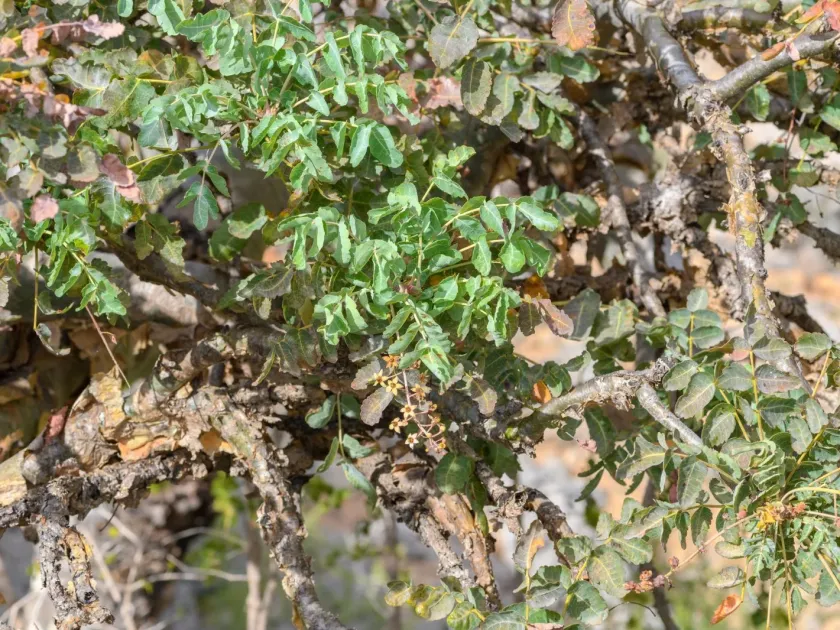
Description
Sowing dates
Propagation of Boswellia dioscoridis is typically managed through seeds or specialized stem cuttings, requiring careful handling due to the succulent nature of the species.
Sowing should take place during the warm season when temperatures are consistently high, as the seeds require significant thermal energy for successful germination.
The planting medium must be highly porous, using a mix of volcanic grit or sand, ensuring that the roots are not subjected to prolonged moisture.
Care must be taken during the seedling stage, as young plants are vulnerable to fungal infections if the humidity levels are maintained too high.
Cuttings should be allowed to form a callus before being placed in the growing medium to prevent the entry of pathogens into the succulent tissue.
Growing requirements
Boswellia dioscoridis is a member of the Burseraceae family, native to the arid landscapes of Socotra, which dictates its preference for extreme environmental conditions.
This tree requires full sun exposure throughout the day, as reduced light levels lead to etiolated growth and poor resin production in mature specimens.
The soil profile must be extremely well-drained, mirroring the limestone and rocky environments where these plants naturally thrive in the wild.
Temperature management is critical; the species flourishes in desert-like conditions and requires consistent heat to maintain its metabolic activities.
Watering requirements are minimal; the plant acts as a xerophyte, storing water in its trunk, and should only be irrigated during the peak of its active growth phase.
Main diseases and pests
The most significant threat to Boswellia dioscoridis is root rot resulting from excess moisture, which often occurs if the soil drainage is compromised.
Pests such as mealybugs and spider mites can infest the trees, particularly in nursery settings where airflow is restricted or humidity is too high.
Mechanical injuries to the trunk during harvesting can lead to wood rot if not properly treated with antifungal agents or allowed to dry completely.
Environmental stress caused by sudden temperature drops or over-fertilization can weaken the tree, making it susceptible to various secondary infections.
- Maintain high-level irrigation control.
- Conduct periodic health checks of the bark.
- Apply specialized fungicides to any open incisions.
- Ensure constant and brisk airflow in cultivation areas.
Harvesting
The primary economic output is the harvest of fragrant resin, which is collected by making controlled incisions in the bark of the trunk during the dry season.
Resin collection is an artisanal process that must be performed with precision to avoid compromising the health of the tree structure.
Once the resin exudes and hardens into tears, it is manually harvested, with different grades assigned based on the purity and aroma of the substance.
The frequency of harvesting is limited by the tree's need to store nutrients, necessitating long intervals between tapping sessions to ensure long-term vitality.
Post-harvest processing involves cleaning the resin tears and sorting them to meet the strict quality standards of the perfume and pharmaceutical industries.