
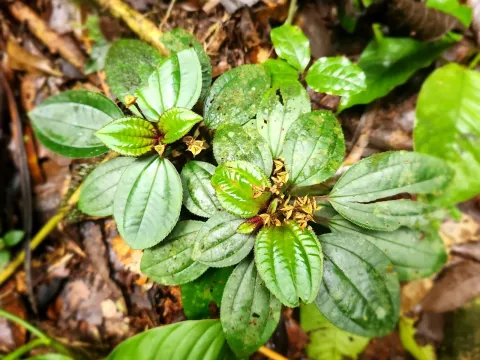
Bertolonia
Bertolonia
Bertolonia is a genus of low-growing herbaceous plants belonging to the Melastomataceae family. Native to the tropical rainforests of Brazil, these plants are highly valued in horticulture for their visually striking, often velvety foliage that features intricate venation.
What the section contains

Bertolonia
Cultivation of Bertolonia requires specialized conditions that mimic its natural habitat. The plant thrives in environments with high humidity levels and constant, mild temperatures, usually between 20°C and 25°C. Due to these requirements, it is rarely grown as a standard houseplant.
Most growers recommend keeping Bertolonia inside terrariums or glass cases to protect it from dry air and cold drafts. This controlled environment allows for the maintenance of the specific microclimate necessary for the plant to thrive and retain its vibrant colors.
The soil substrate should be lightweight, airy, and rich in organic matter. A mixture consisting of peat moss, pine bark, and perlite works effectively, provided that it is placed in a pot with a very efficient drainage system to prevent waterlogging.
Light requirements are focused on bright, indirect sun. The plants are naturally adapted to the shady forest floor, so placing them in direct sunlight will quickly cause leaf scorch and dehydration of the delicate foliage.
The primary pests targeting Bertolonia are spider mites, which thrive in environments where humidity levels fluctuate. Regular misting or the use of a terrarium helps to keep these pests at bay.
Fungal infections such as Botrytis or various root rots are common threats, typically resulting from overwatering or insufficient ventilation. Maintaining good air circulation is essential for the long-term health of the plant.