
Bertolonia marmorata
Bertolonia marmorata
Description
Growing requirements
Bertolonia marmorata is a distinctive ornamental plant belonging to the Melastomataceae family. Native to the tropical rainforests of Brazil, it thrives in the understory where it benefits from filtered light and constant, high ambient humidity levels.
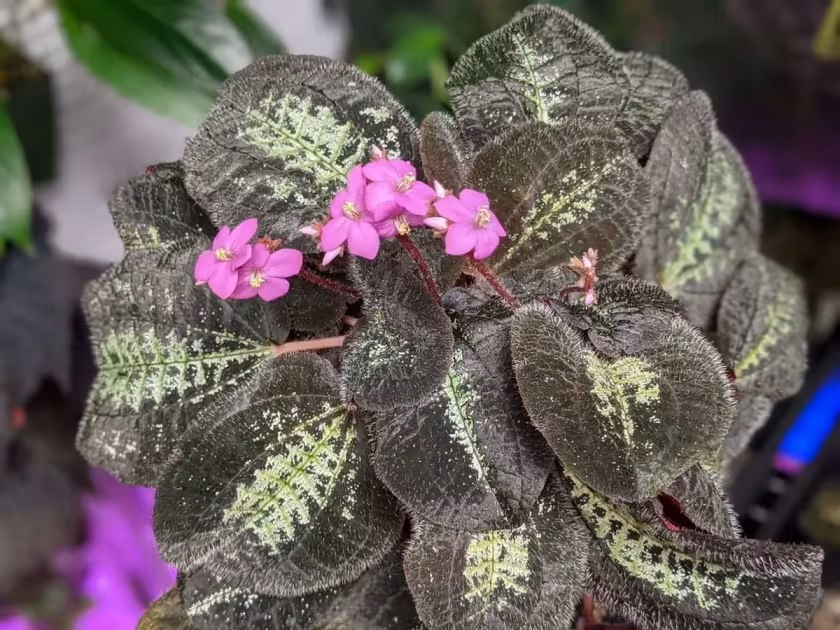
The plant is primarily valued for its stunning, velvety foliage that features striking silver or white veins, resembling intricate marble patterns. It typically grows as a low, spreading herb, making it an excellent choice for terrariums or humid glass gardens.
Cultivation requirements focus heavily on mimicking its natural habitat. A consistent temperature range between 18 and 25 degrees Celsius is essential. The plant is extremely sensitive to cold drafts and sudden changes in thermal conditions, which can lead to rapid leaf drop.
Soil management is crucial for the health of Bertolonia. A well-draining, slightly acidic substrate is required to prevent waterlogging. A mixture consisting of peat moss, perlite, and leaf mold provides the necessary aeration and moisture retention for the roots.
High humidity is the most demanding aspect of its care. If the ambient air is too dry, the leaf edges will quickly crisp and turn brown. Regularly misting the plant with tepid water or placing it in a high-humidity controlled environment is recommended for success.
Main diseases and pests
The primary pests affecting Bertolonia marmorata are spider mites, which thrive in dry indoor air. These tiny pests suck sap from the leaves, causing stippling and eventual chlorosis of the foliage, which ruins the plant's aesthetic value.
Mealybugs can also pose a threat, often hiding in the crevices between the stems and leaves. Because of the delicate texture of the foliage, it is difficult to wipe the leaves clean, making early detection and preventive measures like systemic treatments vital.
Fungal issues, such as leaf spot and root rot, occur when moisture levels are mismanaged. If the potting medium is kept constantly soggy without sufficient aeration, the root system will suffocate and succumb to decay, leading to wilting of the entire plant.
Prevention involves ensuring good air circulation around the plant while maintaining high humidity. Avoiding overhead watering is beneficial, as water sitting on the velvety leaves can create a breeding ground for fungal spores and bacterial pathogens.
To control an outbreak, isolate the affected plant immediately to prevent cross-contamination. Carefully prune any heavily damaged or decaying leaves and treat the remaining foliage with gentle, plant-safe acaricides or antifungal sprays if necessary.