
Beaucarnea stricta
Beaucarnea stricta
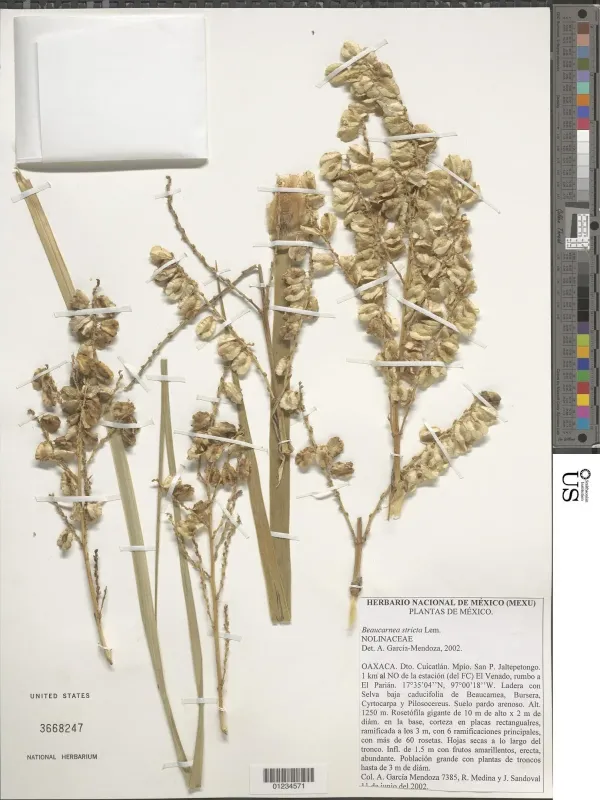
Description
Growing requirements
Beaucarnea stricta is a succulent species within the Asparagaceae family, native to the arid rocky habitats of Mexico. Known for its distinct caudex, this plant is evolutionary adapted to store water, allowing it to survive long periods of drought in its natural environment.
Cultivation requires high levels of bright, indirect sunlight to maintain its structural integrity and encourage the growth of its thick, bottle-like base. Inadequate light conditions often lead to etiolation, where the plant grows weak and loses its natural aesthetic appeal.
Soil requirements are strict: the substrate must be highly porous and well-draining, such as a mix of cactus soil, coarse sand, and perlite. A heavy or moisture-retaining soil will quickly cause root rot, which is the most frequent cause of failure in growing this species.
Watering should be performed on a strict cycle of saturation and complete dehydration. During the active growing season, moderate water is sufficient, while in the dormant winter months, water intake should be reduced to an absolute minimum to mimic its native seasonal cycles.
The economic value of this culture lies primarily in the ornamental horticulture market. It is highly sought after for its slow growth rate, longevity, and low-maintenance requirements, making it a staple in contemporary interior design and dry climate landscape gardening.
Main diseases and pests
The most common pests affecting Beaucarnea stricta include spider mites and mealybugs, which thrive in environments with low humidity and poor ventilation. Regular visual inspection of the leaf crown is necessary to catch infestations early.
Root rot caused by fungal pathogens is the primary disease risk. Maintaining proper soil moisture and ensuring excellent drainage are the most effective prophylactic measures to keep the plant healthy and vigorous for many years.