
Beaucarnea hookeri
Beaucarnea hookeri
Description
Growing requirements
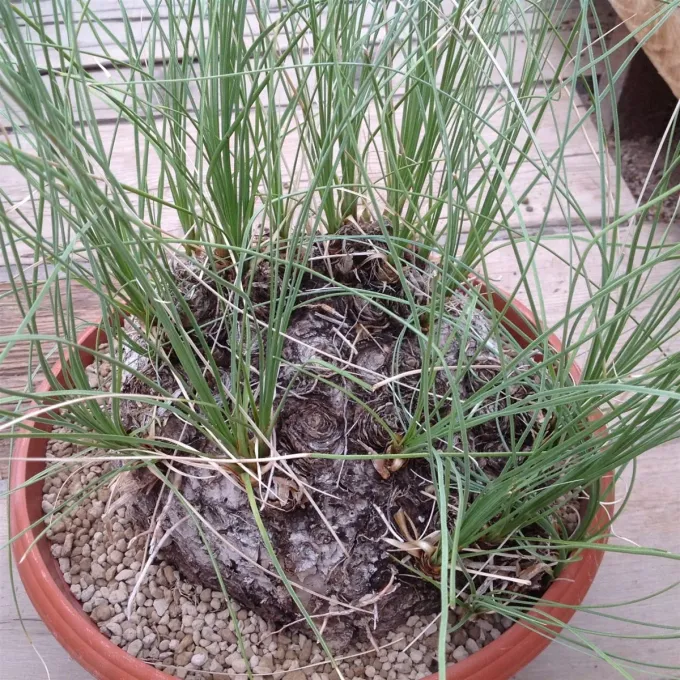
Beaucarnea hookeri is a distinct succulent species belonging to the Asparagaceae family. Often celebrated for its unique structural appeal, it features a bulbous caudex at the base of the trunk, which serves as a specialized organ for water storage, allowing the plant to withstand prolonged drought periods.
Native to the arid regions of Mexico, this species requires specific environmental conditions for optimal growth. It thrives in high-light intensity environments, making it an excellent candidate for bright indoor spaces or greenhouse cultivation where direct sunlight can be provided to support its slow but steady growth cycle.
Regarding soil requirements, the culture demands a highly porous and well-draining substrate. A typical mix includes a blend of coarse sand, perlite, and volcanic rock, ensuring that excess moisture is efficiently drained away, which is paramount to preventing root asphyxiation and rot.
Climatic preferences are centered around warmth during the growing season and a cool, dry dormancy period during winter. Maintaining temperatures between +20°C and +25°C during active growth phases promotes health, while keeping the plant slightly cooler in winter mimics its natural habitat cycle.
Agronomic maintenance centers on the "soak and dry" method of irrigation. Water should only be applied when the substrate is thoroughly dry, and the frequency should be significantly reduced during the winter months to reflect the reduced metabolic activity of the succulent.
Main diseases and pests
The primary threat to Beaucarnea hookeri is the development of rot, which typically stems from overwatering or inadequate soil drainage. Once rot penetrates the caudex, the plant's structural integrity is compromised, often resulting in total loss if not detected in the earliest stages.
Spider mites represent the most persistent pest threat, particularly in environments with low ambient humidity. These pests feed on the foliage, leading to yellowing, loss of vigor, and the eventual appearance of fine webbing that diminishes the aesthetic quality of the specimen.
Scale insects and mealybugs can also infest the plant, primarily hiding in the tight crevices where the leaves attach to the trunk. These pests are notoriously difficult to eradicate once a colony has established itself, necessitating early detection and systemic insecticidal treatment.
Fungal leaf spot diseases may appear if the plant is kept in conditions with poor air circulation and high humidity levels. Enhancing airflow around the canopy and ensuring the foliage remains dry during irrigation are fundamental steps in preventing the spread of these pathogens.
Integrated pest management protocols, including regular visual inspections and the immediate isolation of infected specimens, are essential for maintaining the health of the collection and preventing widespread outbreaks in greenhouse or nursery settings.