
Punting pole bamboo
Bambusa tuldoides
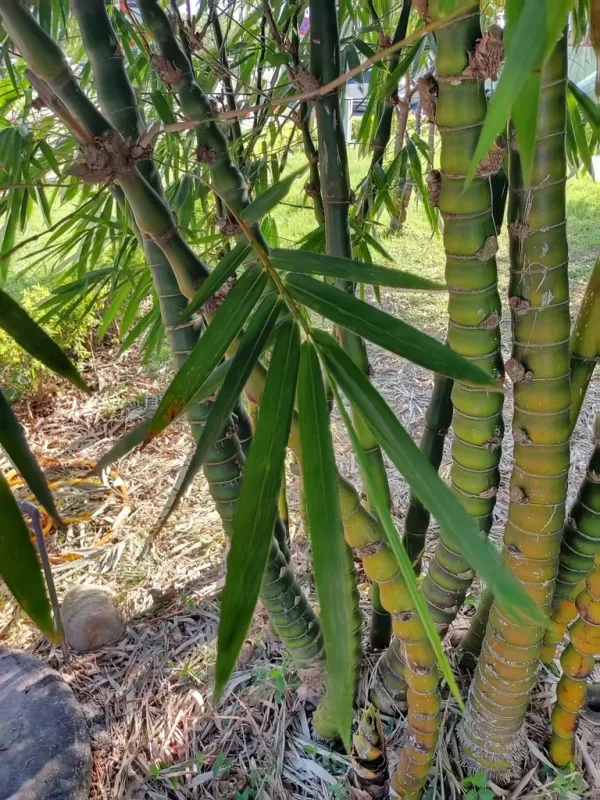
Description
Growing requirements
Punting pole bamboo (Bambusa tuldoides) belongs to the Poaceae family. It is a robust, sympodial bamboo species known for its dense clumping growth habit, which allows for easier management compared to running bamboo varieties in a plantation setting.
Native to Southern China, this species thrives in tropical and subtropical climates. It performs best in regions where temperatures remain warm year-round, as it is relatively sensitive to severe frost, which can damage the tender culms and foliage.
The crop requires deep, fertile, and well-drained soils to reach its full potential. While it loves moisture, stagnant water in the root zone is detrimental, so planting on slopes or elevated beds is recommended in areas with high rainfall.
Agrotechnical management includes consistent nitrogen-based fertilization during the growing season to support the rapid development of new culms. Regular irrigation is necessary during dry spells to maintain the quality and flexibility of the wood.
The industrial applications are extensive, ranging from traditional construction and scaffolding to modern furniture making and flooring. Its culms are highly valued for their strength, straightness, and uniform wall thickness.
Main diseases and pests
Bamboo mites are among the most persistent pests for this species. They feed on the underside of leaves, causing discoloration and shedding, which leads to reduced overall vigor and lower biomass production over time.
Wood-boring beetles can cause significant economic loss by creating tunnels in mature culms. To manage this, harvesters should prioritize the extraction of older, less resilient stems, which are most attractive to these wood-dwelling insects.
Fungal pathogens, such as leaf rust and various blights, are typically associated with poor air circulation and excessive humidity. Pruning overgrown clumps and removing debris from the base of the plants helps mitigate these risks.
Aphids often target the soft, emerging shoots during the early stages of the growing season. If left untreated, they can deform the growth of the young culm, resulting in lower structural quality for industrial processing.
Integrated pest management (IPM) practices, such as encouraging natural predators and ensuring optimal plant density, are essential for maintaining a healthy and productive plantation without relying solely on chemical treatments.