
Burmese bamboo
Bambusa burmanica
Description
Growing requirements
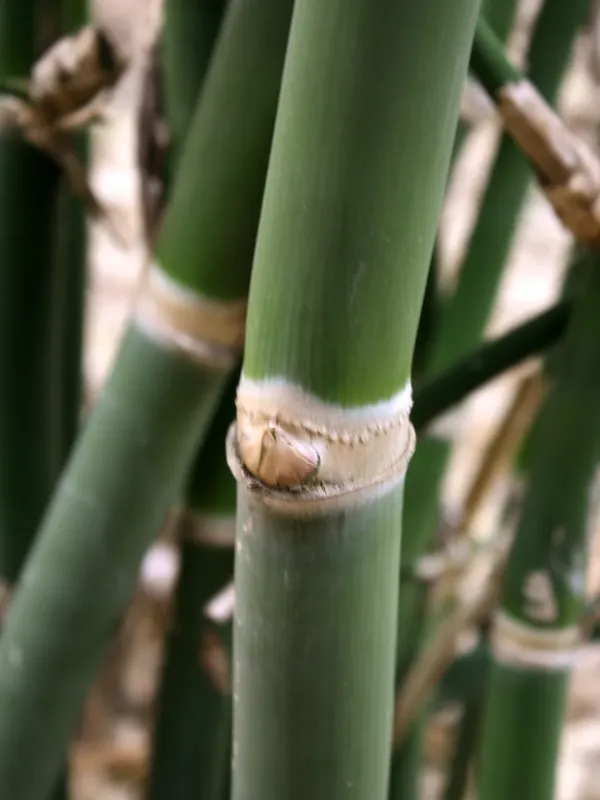
Burmese bamboo (Bambusa burmanica) is a prominent member of the Poaceae family. It is a large, perennial, clump-forming grass species characterized by robust, woody culms that grow in dense clusters.
Native to the tropical regions of Southeast Asia, specifically Myanmar and Thailand, this species thrives in humid environments with significant annual rainfall and warm, stable temperatures.
It demands fertile, well-drained loamy soils to reach its full growth potential. While it requires high moisture levels, it does not tolerate waterlogged conditions, which can lead to root rot and stunted development.
The climate requirements for Bambusa burmanica are strict, as it is a tropical plant. It requires temperatures consistently above 20°C and is extremely sensitive to frost, which limits its cultivation area.
Proper planting density is crucial for agricultural success. Adequate spacing allows for air circulation and light penetration, which are necessary to prevent fungal outbreaks within the bamboo stand.
Yield
The primary economic value of Burmese bamboo lies in its structural timber. The culms are prized for their strength, flexibility, and lightweight properties, making them ideal for construction and furniture manufacturing.
In many regions, the young shoots of this species are harvested for culinary purposes. They serve as a nutritious food source, commonly prepared in stir-fries and soups after proper boiling to remove bitterness.
The fiber extracted from the culms is an excellent raw material for the pulp and paper industry. Its cellulose content makes it a sustainable alternative to conventional wood pulp.
Yield management involves careful selection harvesting. By removing older, mature culms while leaving younger stems, farmers can sustain productivity for many years without replanting the entire site.
Besides commercial timber, the plant is extensively used for bio-fencing and erosion control. Its extensive root system stabilizes soil effectively, particularly on steep slopes in tropical regions.
Main diseases and pests
Boring insects represent the most significant threat to the crop, as they penetrate the culms and degrade the structural quality of the wood. Post-harvest treatment is often required to ensure longevity.
Fungal diseases are a constant concern in high-humidity climates. Proper stand management, including the removal of dead or rotting culms, is essential to reduce fungal pressure within the plantation.
Weed competition during the establishment phase can severely handicap growth. Farmers must ensure the young plants are kept clear of competing vegetation until the canopy closes.
Mites and aphids can target new shoots during dry spells. Regular scouting and, if necessary, the application of biological controls help maintain plant vigor during these stressful periods.
While generally resilient, the crop requires careful monitoring for signs of nutrient deficiencies, particularly in soils where intensive harvesting has depleted nitrogen levels over time.